The Talkies
“Wild Mountain Thyme” (2020)
Director: John Patrick Shanley (based on his play)
Run time: 1 hour 42 minutes
Feels Like: Visiting one of those theme villages where everyone refuses to break character
EVERY ONCE AND AGAIN a talented writer vandalizes his own work and comes up with something. We’re not talking about something better, but something new, the way a painter can’t let well enough alone.
William Inge, unfulfilled with the happy ending he wrote in “Picnic” reworked it as “Summer Brave.” John Patrick Shanley took his comedy “Outside Mullingar” and revamped it for the screen, added new characters, assembled family backstories, and broadened the main characters, and made the whole thing a Hibernian comedy of manners called “Wild Mountain Thyme.”
It is worth the watching for some wonderful dialogue, some of which borders on the metaphysical, such as when one of them observes, “Maybe the quiet around the thing is more important than the thing itself.”
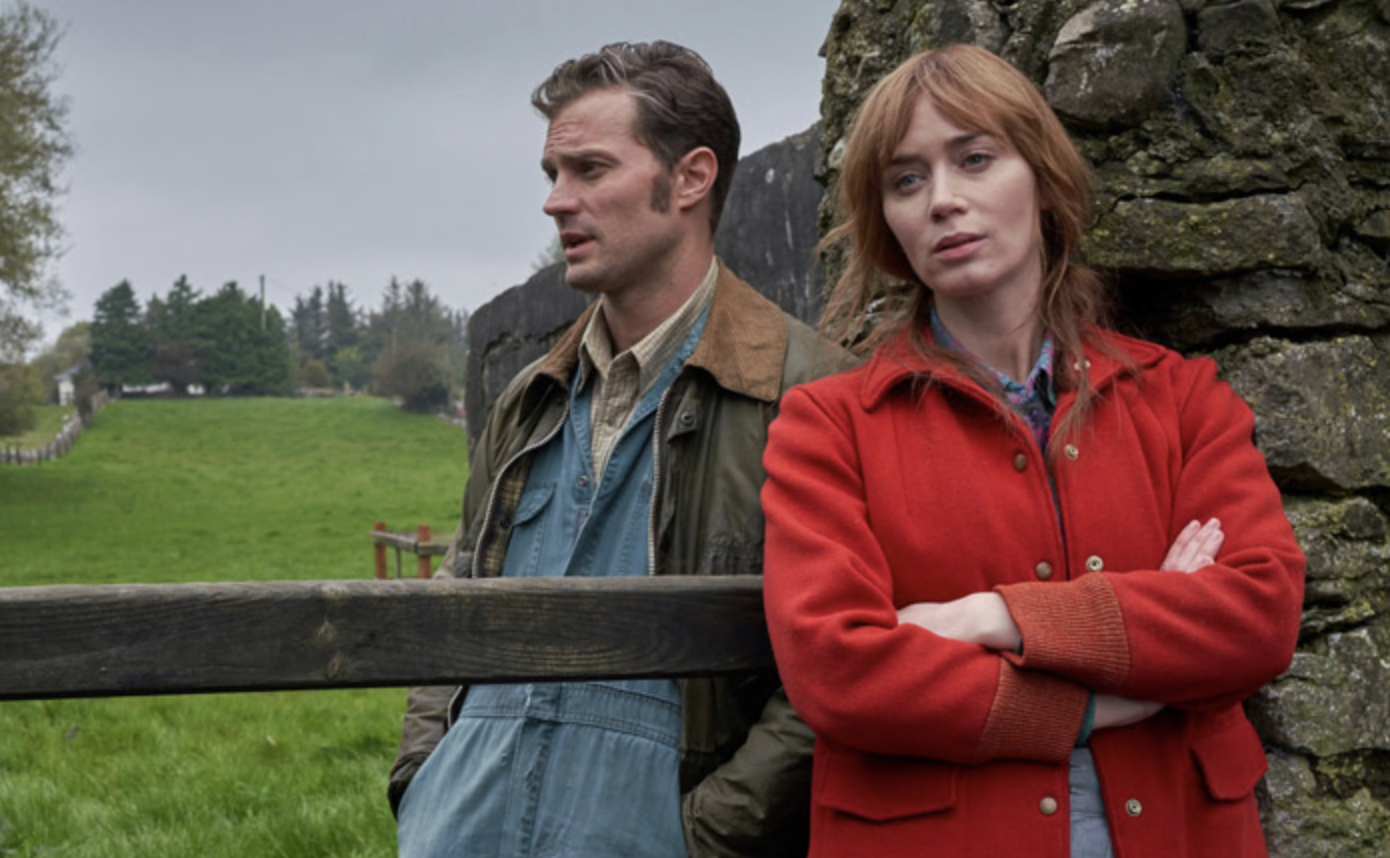
The plot centers on the lives of two neighboring farmers, Anthony and Rosemary. They are destined for each other, though Anthony is profoundly shy. Rosemary, played convincingly by Emily Blunt, is headstrong and practical. The archetype of this sort of Irishwoman was established by Maureen O’Hara in “The Quiet Man.” And like “The Quiet Man,” it turns on a dispute over land.
Land disputes are a traditional theme in Irish literature. Romantics will insist on seeing it as the retelling of legends about monarchs marrying off their children to combine kingdoms. Anthony’s father, portrayed by Christopher Walken, contemplates passing the farm to a rich cousin in America, played by Jon Hamm.
The cousin takes a shine to Rosemary, who in turn confronts Anthony with a demand that he marry her. This is when it gets wonderfully weird. Anthony confides to her that he believes he is really a honeybee. This makes him irresistible to her and they are one. The rich cousin ends up with a woman he meets on the Aer Lingus flight to Ireland en route to woo Rosemary.
The business about Anthony thinking he’s a bee is not a case of an Irishman speaking metaphorically. Nor is it terribly surprising that Rosemary is all the more in love with him for his craziness. I once read the acknowledgement in a book in which the Irish author thanks someone for providing an old legal document in which a judge declares a man mentally competent “notwithstanding the fact that he believed he was turning into a large screech owl.” The Irish long ago emptied their asylums so they could fill their literature.
The strange end, reminiscent of the moment in “Places in the Heart” where all the dead characters sit side-by-side with the living during communion, defies easy acceptance on any level save the aesthetic. It’s sufficiently weird to guarantee it will always appeal to someone. In Irish cinema, spooky sentimentality is all the rage so long as it is refracted through a lens of pure madness. Bull McCabe picks a fistfight with the Atlantic Ocean at the close of “The Field.” A boy’s dead mother comes back as a horse in “Into the West.”
This movie could have benefitted from a larger budget: film instead of digital, weather effects that don’t look like them, and a color treatment that didn’t make it look like a Kerrygold commercial.
They would have done the narrative a service by clipping the introduction and closing shots with the dead relatives watching. They’re Irish. They already know the dead are watching.
“Melania” (2025)
Director: Brett Ratner
Run Time: 1 hour 48 minutes
Feels like: Childhood visit to that boring aunt who doesn’t even have decent cookies
THE LINE between biography and hagiography can be tricky to navigate. Brett Ratner spares us the struggle. This movie pole vaults over it. There is no hidden artistry to this creation. It begins with camera angles from “The Devil Wears Prada,” and buries itself in a narrative from someone’s home movies of prom night.
This movie emerged as a vanity project about the only Trump wife to outwit her captor. Hell, one of them wound up buried on a golf course in New Jersey. They didn’t even try that on “The Sopranos.” Jeff Bezos wanted an “in” with Donald Trump and experience has taught me that to please a client it helps to suck up to the wife.
So, a billionaire ass-kisser dispatched a camera crew and assigned the task to Brett Ratner. Ratner is best known for directing the “Rush Hour,” the Dollar General of movie franchises. If we were waiting for Ratner to surprise us, we can draw comfort in knowing that a better movie lies ahead in his career, even if he keeps the lens cap on. He has failed in the effort to transform Melania Trump into the down-market Jacqueline Kennedy.
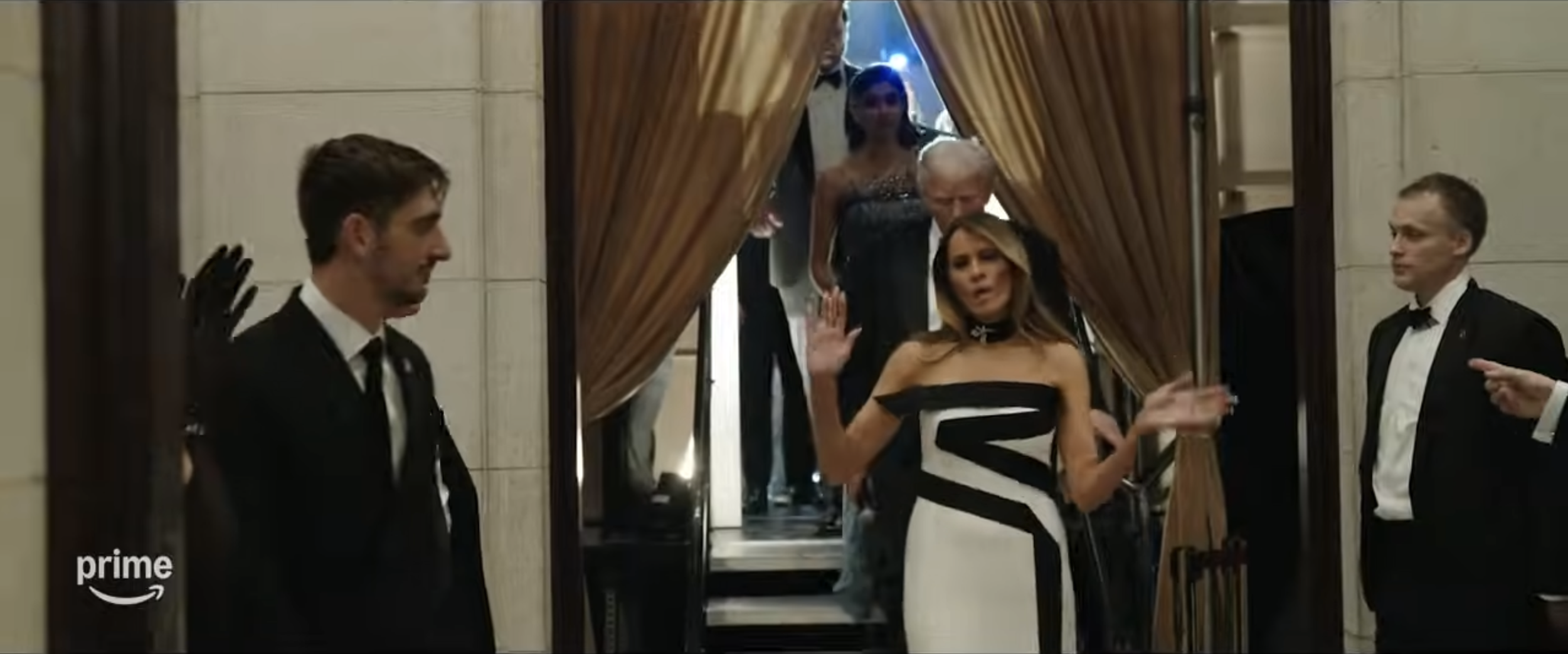
One can argue about the underlying politics of a movie and yet appreciate its mastery of camera and overall aesthetics. Consider Leni Riefenstahl. Her documentaries of Hitler’s rallies and the 1936 Olympics almost made you forget the unseemliness of their central character. It is impossible to watch this movie and forget that it is about Melania Trump. We are invited to watch her at gilded desks, receiving the Queen of Jordan or being fitted for an inaugural ball gown, all against a voiceover about how she has committed herself to redefining the role of First Lady. It fails as an example of cinema verité and as documentaries go, too many extemporaneous scenes make the viewer wonder if they’re the first take.
We see sidewalk-level camera shots of her Manolo Blahnik heels and sleek ankles – a kind of angle that suggests access that would only be granted to the most pliably friendly director. A movie need not be a hostile expose to be interesting. There are other ways. Ratner has found none of them. Instead, we are fed a catalogue of accomplishments that mostly revolves around her decorating skills, including a redecoration of the White House bowling alley. She redesigned the bowling alley. Who worries about the look of a bowling alley? I’m paying five dollars a gallon for gasoline and she’s decorating a bowling alley. But she confidently adds it to her public resumé. This movie is one act of vulgarity affirming another.
It feels unseemly dismissing a First Lady. Melania herself seems to have a strong sense of self, informed by the idea that style and fashion are legitimate expressions of intellect. There is something to that argument, though it is wasted on the very middle-brow Americans to whom Donald Trump appeals. A first lady who undergoes a hands-on fitting for her gown in front of a camera, or who turns White House rooms into what IKEA would churn out if asked to design a bordello, is an assertive woman and women are supposed to assert themselves these days. Most of them do it without reading from a script in service to a modern Caligula.
Donald Trump makes the obligatory appearance. The movie might not be about him, but it’s certainly because of him. The movie comes closest to authenticity in these segments, because they show how authentically vain and ridiculous the president is. He mutters about the national college football championship coinciding with Inaugural Day and suggests it might be deliberate. He comes off as the bride who just heard that a cousin announced her engagement at her wedding reception. At one of the multiple Inaugural Balls, Trump and Melania slow dance to “The Battle Hymn of the Republic.” Someday someone’s going to top that, perhaps by twerking to “Ave Maria.”
“Candy” (1968)
Director: Christian Marquand
Run time: 2 hours 4 minutes
Feels like: Cleaning out your closet and finding a Nehru jacket
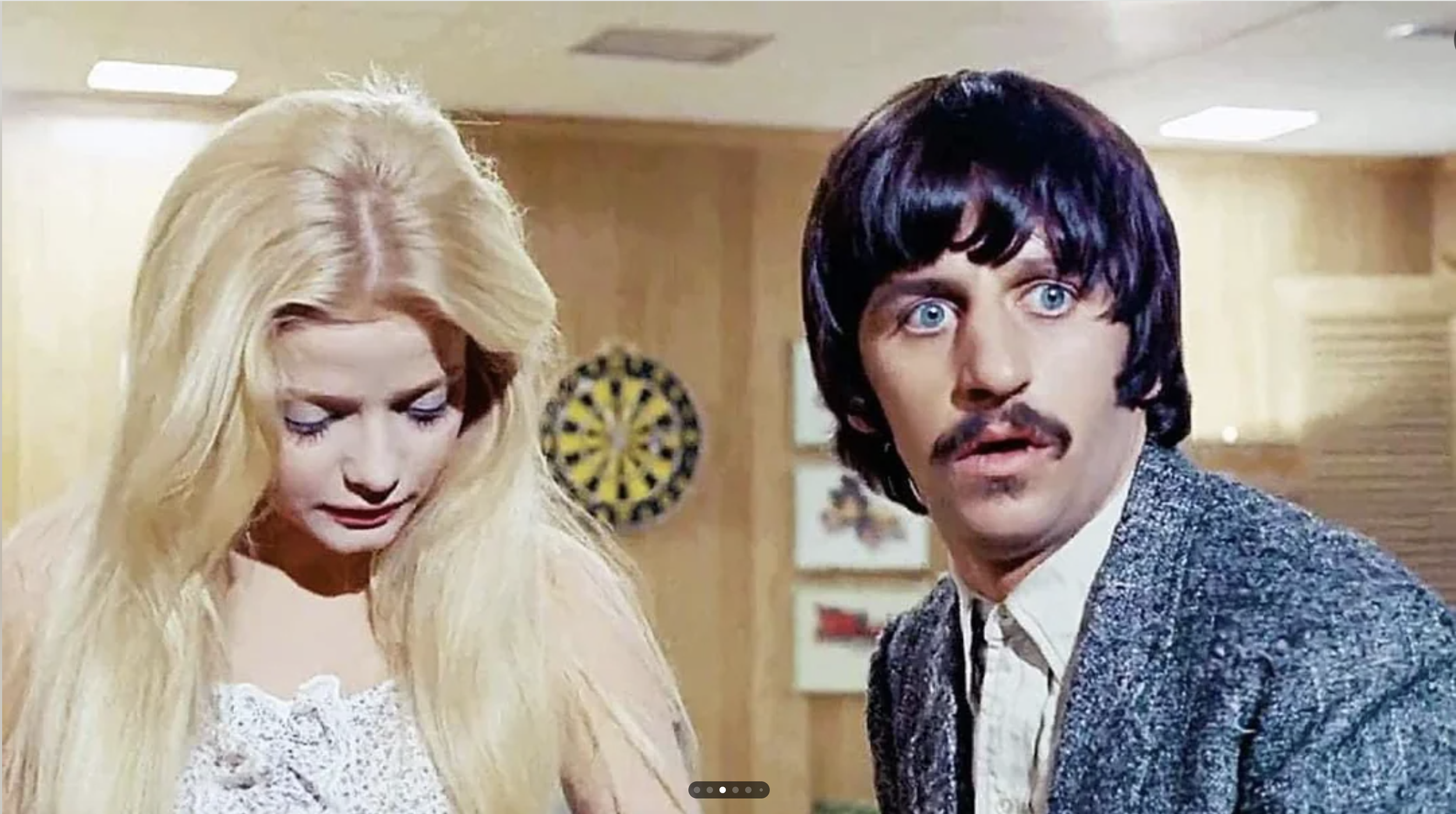
THIS MOVIE was released into the wilderness of the late sixties and promptly eaten by more interesting movies. Such was the law of the Jungle of Groove. Based on the novel by Terry Southern, the narrative centers on a breathily naïve high school ingenue whose journey of self-discovery consists of being pawed by adults. It is of the psychedelic genre of cinema, with a musical background by bands such as Steppenwolf and The Byrds and a script by grown-ass men who should have known this would not age well.
The cast comprises exiles from better films: Marlon Brando, Richard Burton, Charles Aznevour, John Huston, James Coburn and Walter Matthau all have an opportunity to look foolish, though Coburn’s scene as a surgeon in an operating theater is well played. John Astin and Ringo Starr have roles. Astin plays Candy’s father. Ringo Starr attempts to portray a Mexican gardener and ends up evoking Benny Hill with a bad accent. It is hard to understand why this movie did not end their careers. I have yet to mention the titular star of the movie, Ewa Aulin. She gave up acting after this.
“Candy’s” draw was its nudity, which was gratuitous in the sense that it evoked the gratitude of any 15-year-old boy who managed to sneak into the theater. It is well to remember that 1968 was a turbulent year that cemented a generation’s cynicism. Late in life, finally seeing this movie, I realized that the cynicism it created was on the part of motion picture producers, not their audiences. We all were hoping for better in 1968. We got this movie and, a few months later, Nixon.
“And God Created Woman” (1956)
Director: Roger Vadim
Run time: 1 hour 32 minutes
Feels like: Adolescence regained, perhaps unwillingly
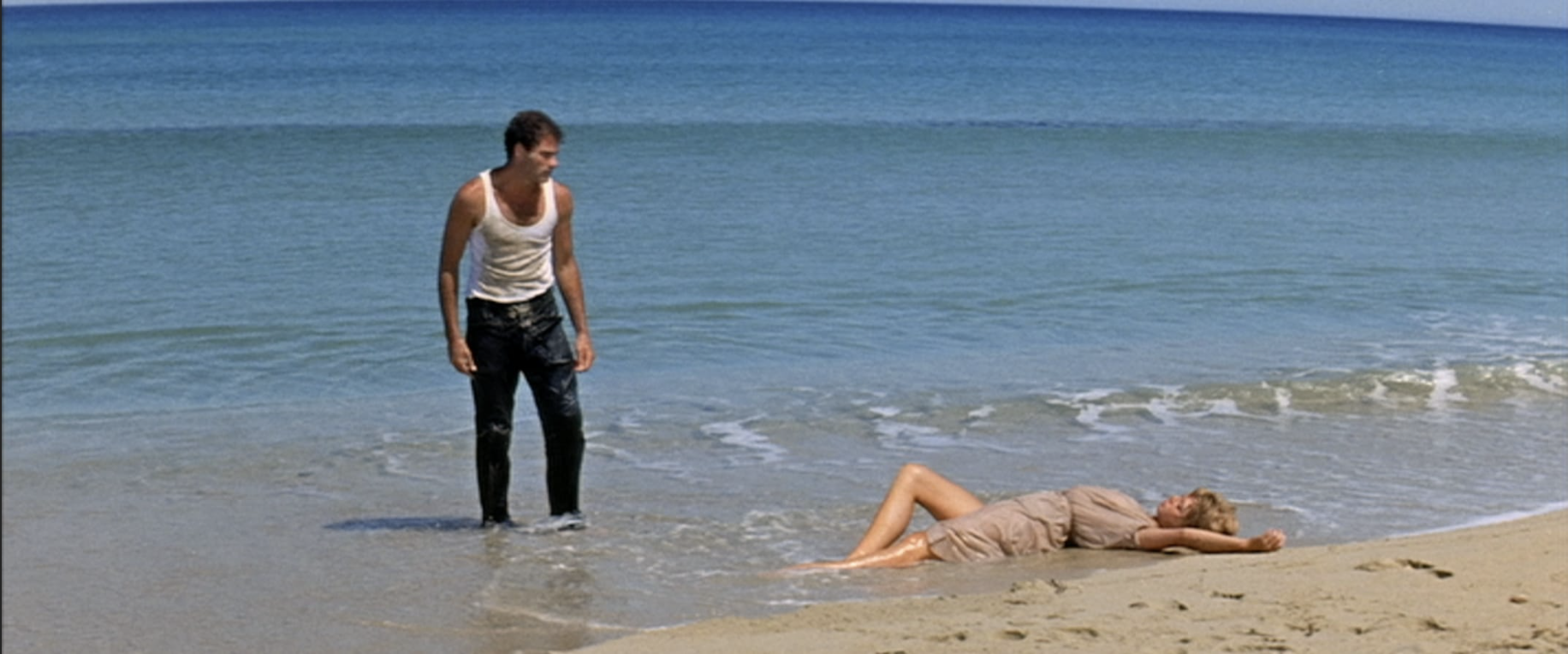
BRIGITTE BARDOT’s journey from sex kitten to crazy cat lady began with this 1956 film, which introduced a rebellious French 22-year-old to a world audience and transformed a decrepit fishing village on the Cote d’ Azur into a harbor full of jetsetters’ yachts.
A growing body of cinematic theory suggests it is a forerunner to the French New Wave. A more
nuanced consensus holds that it is more a sociological phenomenon than cinematic breakthrough. It created a sensation around the world, was condemned by the Church, and required explanation by philosophers. Simone de Beauvoir wrote a lengthy essay about Bardot’s inexplicable appeal. Existentialists were attracted by her embrace of human impulses. Charles DeGaulle adored her. Theologians debated which circle she’d be assigned when she went to hell.
You will note that I have yet to describe the movie. Here’s the summary:
Juliette Hardy, a sexually unconstrained orphan, is fostered by a prudish family to help run their news stand. She hates her job and prefers animals, music and children. She is in thrall to a strapping owner of a struggling family shipyard, the eldest of three brothers. She is pursued by a suave, older millionaire investor. To avoid going back to the orphanage, she marries the middle brother, tries to be faithful but, hey, who among us hasn’t slept with their spouse’s sibling? It all ends with a drunken Juliette doing an erotic dance that ends in the middle brother accidentally shooting the millionaire who must then be driven to a doctor by the oldest brother. The middle brother, played by Jean-Louis Trintignant, gives Juliette a few slaps across the face and they are seen returning home, hand-in-hand, bride presumably tamed and husband’s manly honor restored.
In 1956, this passed as a feminist statement.
I did not see this movie in its first American run. I was four years old and there is no evidence the film made it to my hometown. Its American release was punctuated by bans in cities around the country. Where the law did not act, the clergy did. A bishop in upstate New York asked a local theater not to show it. When they declined, he imposed a six-month ban, forbidding Catholics from entering the theater for any movie at all. Seeing it in late life, I am struck by its relative tameness. With perhaps one emendation, it could be shown on the networks. Another striking quality is how well the cast convincingly pulled off a plot plausible only among the trashiest among us. It is a trailer park tale told by the seashore. And it works – at least for middle-aged men. My wife, who loves good books and better movies, wouldn’t finish it.
Perhaps the lesson here is that some movies become good when they have a larger story built around them. Brigitte Bardot was a media sensation, hounded like prey by the European press, and her four marriages and celebrity affairs were followed by a public that found her train wreck life more closely followed than her movies. Beowulf, for instance, sat around for 1,100 years before being transformed into the British national epic starting in 1815. “And God Created Woman” is far more interesting and Bardot’s performance more poignant knowing that she gave it all up to protect animals, and even more luridly interesting given her later transformation into an anti-immigrant nationalist.
Vadim, Bardot’s husband and director, later attempted a remake of the movie, set in New Mexico, with Rebecca DeMornay portraying an escaped convict. It had steamier sex, more nudity, and I was unable to finish it. The original? I found myself watching it four times. I watched for the landscape, most of it now lost to overdevelopment. I marveled at the sight of a harbor uncrowded with yachts, and quaint bistros that have long ago been stripped of quaint and replaced by Armani. When Bardot was nearly 90, she publicly lamented what the town had become. The town’s mayor invited her to reflect on “who brought vice and lawlessness here.”
There is something to be said about Vadim’s capacity to direct. He pulled performances out of the actors and created stars. In the fifties that counted as part of the artistry. But the breakthrough aspect was Bardot’s capacity to make people feel sympathy for the kind of daughter they’d have sent to a nunnery. Francois Truffaut called it one of the great movies of 1956. Certainly, it was one of the most daring for its time and it all hinged on Vadim’s one genius: allowing his star to follow her instincts more sincerely than the script. To the extent that it marked the start of the French New Wave in cinema, it was less because of style than because it was proof that a single, underfunded director could produce something on his own terms and attract an audience.