The Hispañola Shuffle
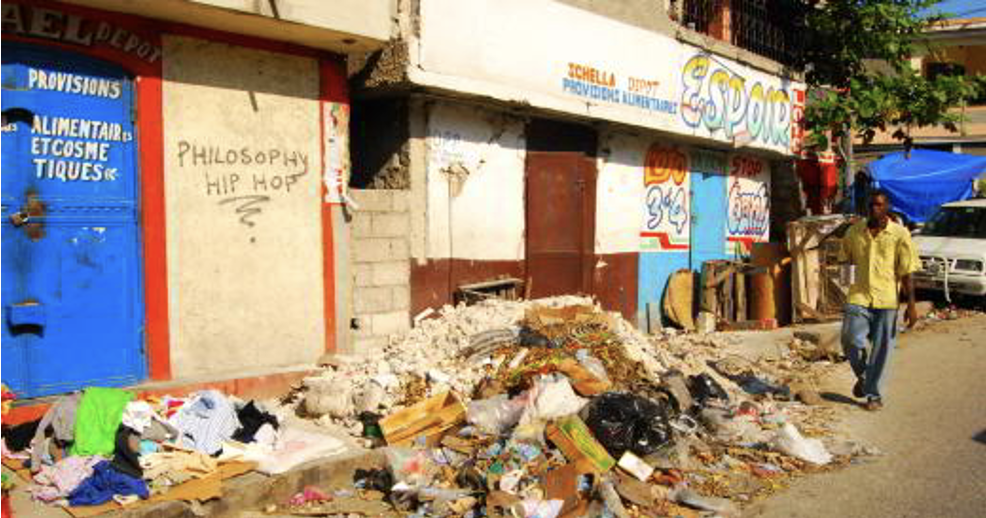
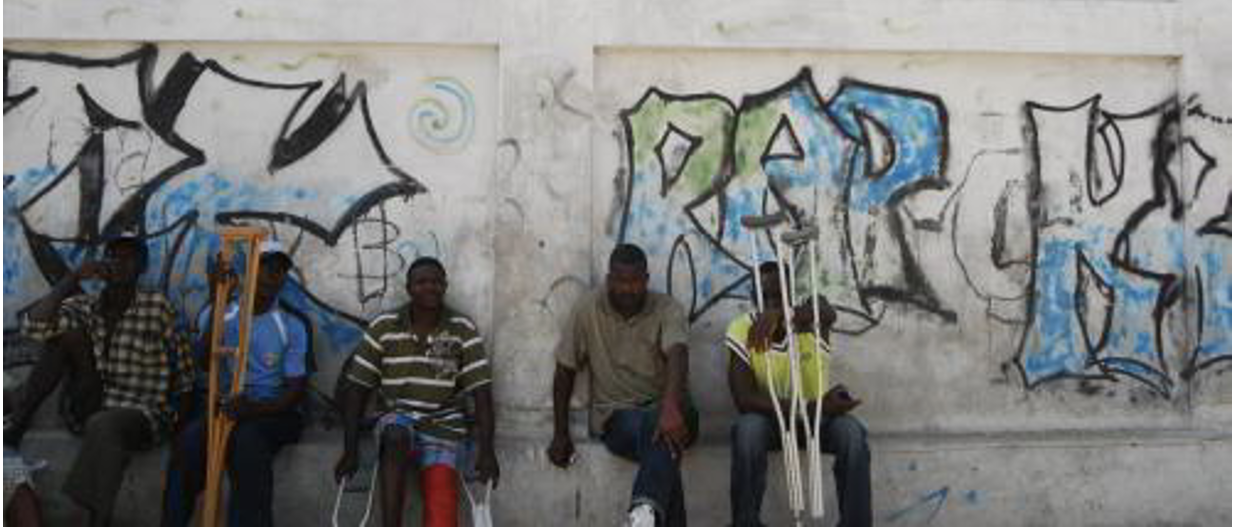
AT NIGHT, Haitians laid big rocks across the streets in Port-au-Prince to keep drivers from running over the people sleeping there. This was not always the case. Until the earthquake of Jan. 12, 2010, even poor Haitians slept indoors. After the earthquake there weren’t many doors standing. Now, they use streets, and driveways, car parks and bed sheets strung next to campfires. The tent cities stir very slowly. At 5 a.m. tap-tap cabs drop off sullen men and women, who will screw up their smiles and work in such shops as have not fallen down.
It is hard to calculate the present Haitian sleep cycle. The tap-taps had to leave the settlements down the hill well before 5 a.m. Nothing seems to open before 7. Everyone walks with a purpose, as if, however improbable the hour, they have been up and walking around for a good 90 minutes already. Possibly, sleep is a polite fiction in the spirit by which someone makes a wish and adds, “God willing.” In this place, God rarely is.
The tent city in Petionville never settles. People pray. Some sing. One night a truck rolled through, framed with colored lights and blaring a song.
“Ayiti! Ayiti!” the cry went up. I roused from bed and wandered into the square.
Two hundred people had poured from under the canopies and tents. They danced and sang behind the truck.
“Why do you dance?” I asked one. She shrugged and replied in Kreyol.
“Pourquoi dansez-vous?” I tried. She replied enough to remind me that I do not understand French or Kreyol.
“We dance for God!” another woman shouted. She clutched my arm. Haitian culture places very little value in the concept of personal space. People live closely, they dance the same way and, stranger or family, when someone is grabbed he is prisoner of the moment’s affections. I danced along for several blocks, my arm around the waist of this stranger, then slid free and melted up a side street. The music echoed down the hill and, an hour later, back in my bed, I heard it circle back to the square.
Many philosophies, same dilemma
THE DESK CLERK at the Kinam Hotel later called it a “manifestation.” It’s a religious thing. Haitians believe deeply in God, although He doesn’t seem to check in often. The song they sang, she said, carried the refrain, “I want to go with Jesus.” The beat and rhythm suggested they wanted to go with the Gods of Calypso.
“There are many people. So they dance,” one man told me. “The song is Glory to the Lord.”
The Lord sufficiently glorified, the crowd vanished back to the tents that have been their home since God was distracted and the earth beneath them trembled enough to kill 300,000 Haitians and leave a million more without roofs.
I told my friend Tim, a relief worker, about it. He scowled and shouted at the sidewalk.
“Aw, Christ. I’d like to just grab the Haitians and shake all the religion out of ’em,” he said.
Whenever disaster or obstacle or misfortune or corruption coalesce into walking hell, he said, the Haitians raise their arms, praise God and dance like fools.
He’s convinced it keeps Haiti down. I’m convinced it keeps what’s left of Haiti up. We parted in an amiable, irresolvable disagreement. I hit the hay early to catch the bus to Santo Domingo. He went to his apartment where he keeps a 9 mm pistol, a relic of prior civic eruptions, on a desk next to his computer.
A line, always there is a line for something
A HAITIAN LINE can take many forms. Food lines remain linear progressions, occasionally punctuated by two men who attempt to fell each other to settle questions of who goes first.
Already fetid, the air takes on the smell of bodies and breath and it mixes with the smoke and soot and urine wafting from gutters. Crush people together and any breath will do, whatever the air.
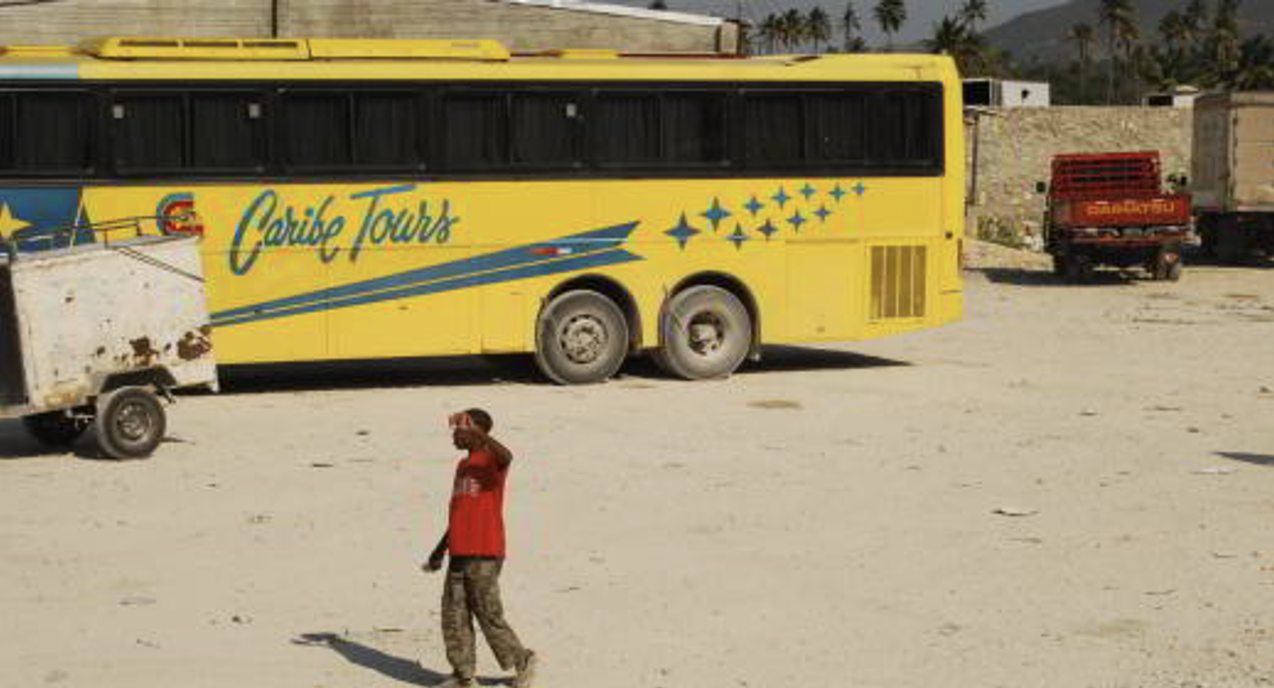
The line for the Caribe bus to Santo Domingo is a line only in the roughest approximation. After endless injunctions to the people who gathered outside the steel gate in the morning darkness, people shifted to one side.
Mike Henninger, being 6-foot 4-inches, was my designated running back. I used my backpack to block off people surging from the other end. He made it inside, was told they were accommodating earlier reservations and told to take a number. When he replied in an American accent, he was hailed over and informed that foreign relief workers and journalists get pride of place. I cast a look back at the crowd pushing its way in, possessions in hand, considered the unfairness of it all, and accepted the deal.
At Malpasse, the hustle begins
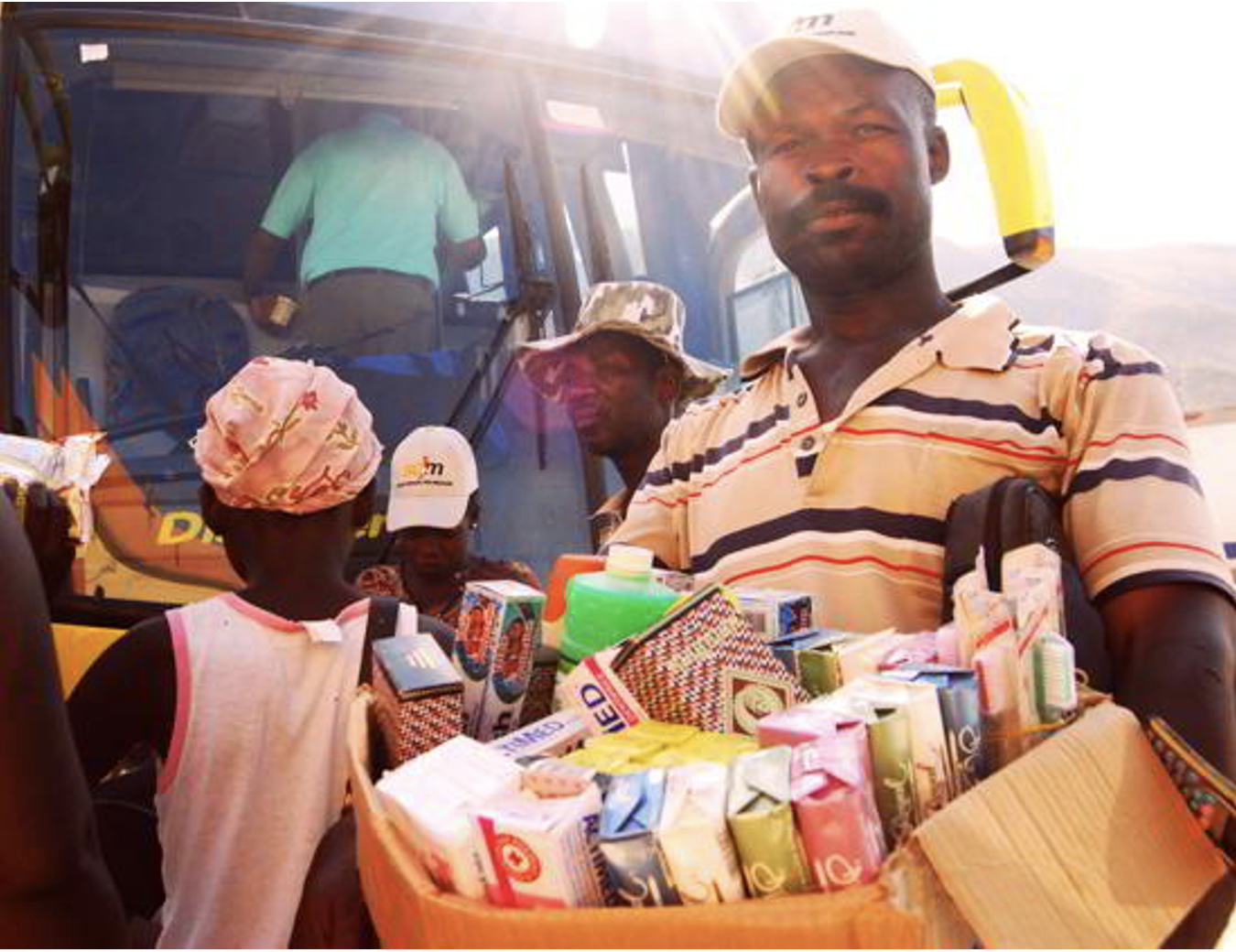
THE BORDER CROSSING at Malpasse is more ritual than legality. Everyone is ordered from the bus. A crowd of locals, mostly children, gathers and waits for the luggage hold doors to open like Ali Baba’s cave. They buzz around, seize bags that are not theirs and cart them, wholly unrequested. They cross the hot, dusty lot to a custom house where people line up to have these bags inspected. Almost no bag is inspected. Most of us turn around and walk back to the bus.
At journey’s end, the kids extort fees for the pointless cartage. The fee is about 25 pesos, roughly a dollar. A doctor, returning from volunteer work, pulls out a 100 peso note and his bill suddenly jumped to what the kid has just seen.
A young man, hair closely cropped, wraparound sunglasses bespeaking Caribbean origins, barks loudly at the kid. The kid yelps back. The man barks back. The doctor looks abashed. Sunglasses tells him not to worry, that he was about to be cheated on top of the original cheat.
The kid takes his 25 pesos and leaves.
“I told him he’s an example of what’s wrong with Haitians,” says the man. His name is Jules Nau, and he is Haitian. Now he lives in Las Vegas and he’s career military. Logistics, he explains. To ask more is to pry too deeply.
“This is the problem here. In this place it’s all about ‘me,’” he says. “The kid saw that bill and he figured, OK, that’s what he’d get.”
Nau has come to help out after the disaster. Now he’s heading home, none the cheerier.
“The international community is going to pull aid in 90 days,” he says. “The Haitian government has a really bad track record with international aid.”
International aid goes into Haiti and a handful of rich, well connected government types is the result. Family and friends suddenly become flush and the roads and wells and civic improvements never happen. When Jean Claude Duvalier and his avaricious wife fled the country in 1986, they took a large chunk of a treasury that relied on the generosity of European strangers. Haitians are still trying to get it back.
PASSENGERS WAIT in the bus. And they wait. Passports are returned by a young woman who shouts a name then hands the passport to the first upraised hand.
Something else has happened. A man announces himself as a commander in the Dominican military and produces a suitcase. He tosses it into the cargo hold of the bus, uninspected. The driver walks away and stays clear of the scene for a good 40 minutes. In fact, there is nary a driver to be seen anywhere among the three buses parked side-by-side. Something is up and a few of the passengers know it. Our bus is transporting something of which the driver wants no part. A long lunch becomes deniability.
Someone else boards and plants a microwave oven at the feet of some poor woman in the first row. She doesn’t complain. The bus is, in small measures, becoming a freighter. After an hour the bus pulls away from Malpasse. A few folks have been shaken down, we’re transporting something that frightens the driver, and someone in Santo Domingo is due a microwave oven.
Cleaner, nicer, beachier / Michael Henninger photo
CALLE MERINO is a street in Santo Domingo’s zona colonial, where forts-turned-monuments and monuments-turned-trading posts crowd with tourists who shed Eurodollars and collect junk to convince their friends back in Pittsburgh or Amsterdam that they were here.
There is bad art, old coins, overpriced cocktails and music that only gets louder the harder one tries to sleep. At Café 360, in the middle of this street, Glenn Kennedy was sacked out on the couch, the air conditioning set to “back home” as it were, meaning his native Montreal in February.
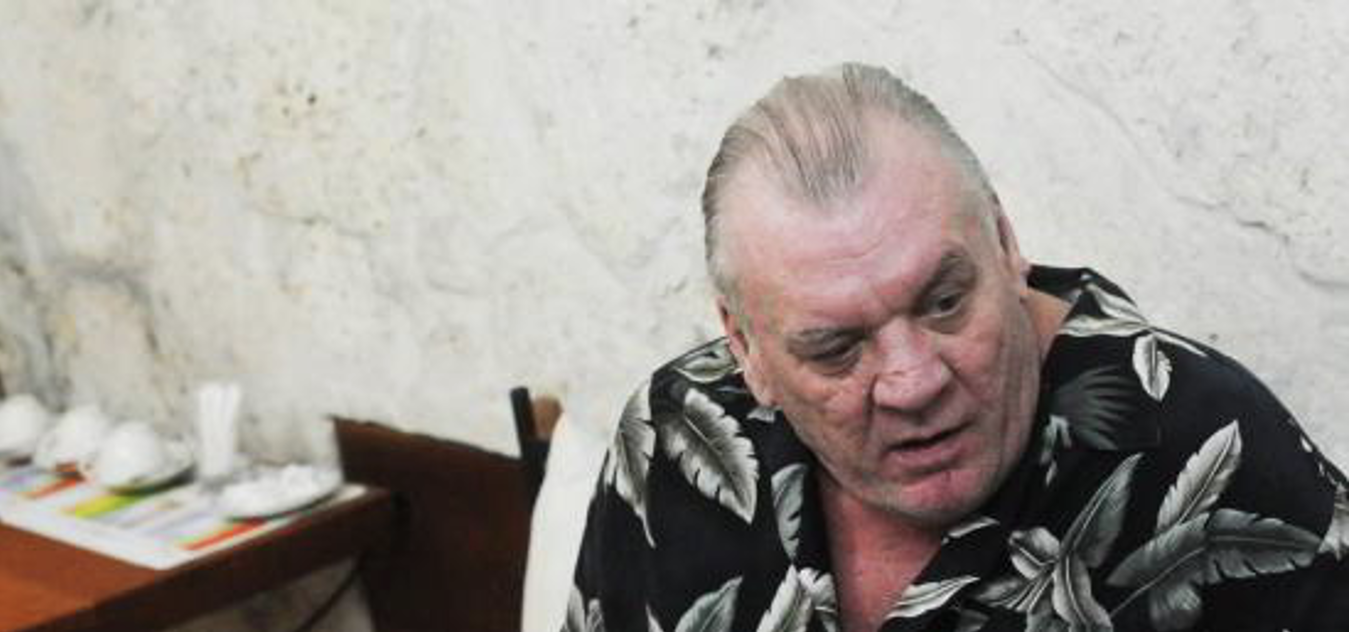
“Urgh, I was just catching a little nap there. No, no, come on in. This is the bar. We’re open,” he says. He rubs his red face, runs a hand through silver hair pulled into a ponytail.
Café 360, he tells his visitor, “isn’t just your ordinary bar.” He proves this by telling me that the attractive young Dominican woman serving my Cuba libre can be purchased along with the drink. Come later tonight, he says, and there will be a wide selection of women rather literally up for grabs. It’s all legal here.
“All these girls have identification and I have them tested,” he tells me. While I try to figure out why I would want some ID from a hooker, he repeats his promise: it’s all legal here.
My suspicions were aroused, not about Café 360, but about Santo Domingo in general, when I checked the price card at my hotel across the street. Rooms are available for $65 a night. They are also available for $5 for three hours or less.
Kennedy’s career as the owner of a bordello con liquor license might be a step up, if only because it’s legal.
Prior to settling here, he was a yacht captain in Jamaica, which is a nice way of saying he did a profitable business smuggling marijuana from the Caribbean to the mainland. His career ended when police in the Bahamas seized his boat and him with it, as he stopped to refuel en route to Canada.
He says he spent two years in a festering hell hole called Fox Hill Prison, a place so notorious for abuse, neglect and moral stank that it has earned a regular rating from Amnesty International.
“Is this a story I haven’t heard?” asks one guy at the bar. He’s Terry Buder, from New York. Let it be clear he’s here to drink, not to disport with fancy girls. His wife is joining him in Santo Domingo shortly. He seems to like this place because Kennedy is good company. The blood of pirates courses through his veins.
“It’s about Fox Hill,” Kennedy says. Buder listens up good.
Well, what about this $5 million in marijuana he mentioned?
“That’s beside the point,” he says. When $5 million in cannabis is beside the point you’re in for a hell of a story. Sad to say, Kennedy disappoints. He did not escape from Fox Hill. He did not become cell block captain. He just watched poor saps being abused, went two years without a shower and emerged qualified to declare that, as in most other places, prisoners are at the caprice of people we wouldn’t hire to push a wheelbarrow. We were also interrupted.
A DUSKY little man fairly burst into the bar, carrying a large plastic bag covering a pot.
“I saw him with a dead goat yesterday, so I’m guessing that’s what’s for dinner,” Kennedy said. Buder leaned over for a better look.
The little guy nodded and unwrapped the pot. It was a pressure cooker. He unbuckled the lid and pointed. Then he smiled, reached in, and pulled out a bony, fleshy goat’s head, the teeth still intact. A wide smile crossed his face and his eyes widened with expectation.
“You hungry?” Kennedy asked me.
“Not anymore,” I said.
“No thanks, no thanks,” Kennedy told him. The man pointed to the head and, as if to explain, then let out a long, tremulous bleat.
“Baaaaaaaaaaaaah,” he said. “Baaaaaaaaaaah.”
Kennedy chuckled and bleated back. I tried a brief goat sound, but worried it might suggest a purchase. I had nowhere to keep a cooked goat’s head. I travel light.
Glenn Kennedy offered the barmaid along with the drink
I AM PLEASED TO REPORT near ignorance as to how prostitution works here. Henninger spent the day at Boca Chica, an hour’s bus ride from Santo Domingo and reported decrepit European men canoodling impossibly attractive young women. One does not have to be Sherlock Holmes to figure it out. The business of banging is booming. Several web sites dedicated to directing visiting Americanos to sex spots in Latin America mention Santo Domingo. The ID that Kennedy mentioned in his pitch means a customer isn’t likely to get rolled; prostitution might be legal here, but theft, as yet, is not.
As near as I could tell, the deal at Café 360, and others, works this way: guy goes in, enjoys a drink, chills in the air conditioning, finds a pretty girl, and then pays an “exit fee” to take her from the place. The bargaining and whatnot take place elsewhere, perhaps in one of those $5 rooms – the prices are listed in American – at my hotel across the street. Henninger and I reflect on this, wonder about the sheets, and sleep uneasily.
ON SATURDAY I went sightseeing. A bit blurry, fagged out by the long bus ride and the longer week that preceded it, I wandered to some sort of old fort. This is the resting place of the three liberators of the Dominican Republic.
Hard to believe, but the same Dominicans that now sneer at the Haitians, were occupied by Haiti for 20 years. When Spain gave up on Hispaniola, the Haitians enjoyed a sudden surge of empire.
Pushed from various sides by Haiti, Cuba and Puerto Rico, the Dominicans rose up under a trio of men named Juan Pablo Duarte, Francisco del Rosario Sanchez, and Matias Ramon Mella.
They called themselves the Trinity. The movement sparked the revolution that drove away the outsiders and, when the next Presidente took office, he also exiled the founders. Today, they are crowded into the same tomb at La Puerta del Conde, the spot where they fired the first shots in the rebellion.
Haitians have Toussant L’Overture and Jean-Jacques Dessalines and each man got it into his head that he would be more king than president. The same seemed to come true with the Dominican Republic as well. If you can’t be emperor, you can be president and if you can be president there’s an even chance you can be dictator.
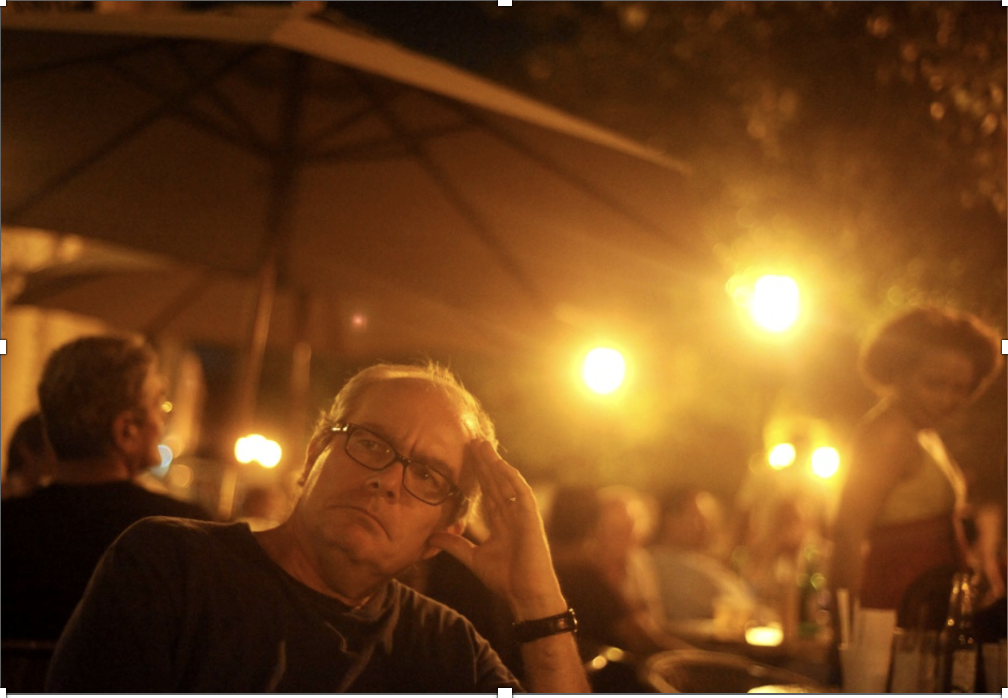
Our correspondent receives his bill / Michael Henninger photo
IF YOU ARE TRADING in American dollars here, prices can verge on the hilarious, so long as you’re not the one paying. On Saturday night, Henninger and I seek out a restaurant. The previous night we ate the hotel. Henninger wouldn’t touch his hamburger after the first bite.
“It tastes like farm,” he says.
I try to explain to him that the steer from which it derives was raised on a farm. Most of the rooms here are reserved for humans and, maybe, stray poultry. A cow lives outside.
It just doesn’t taste the way burgers do back home, he explains.
I know this “farm” taste because I’ve sampled it in Ireland. Truth to tell, I have learned to appreciate it. Most of the world’s beef is grass fed. It lives outdoors and eats what grows wild. In America we feed our beef cattle grain. It gives our beef a flavor that is only a little stronger than cornflakes.
On the Saturday night we dined out, we figured on a no-beef deal. Chicken is the national dish here, right after the barmaids at Café 360. We found ourselves on a main square at the foot of our street at the Anacoana Restaurant. It took several readings of the sign to assure Henninger that nobody was going to try to feed him snake.
When the bill arrived, we looked it over. Henninger has the double blessing of being proficient in Spanish and a onetime mathematics major. He spotted the oddity straight away: our bill was $1,582 Dominican, or $52 American. It should not have been. The Domincan padooga is valued at somewhere around 34 to the dollar.
The waiter shrugs. The manager is called. The manager tells Henninger that, yes, the regular exchange rate might be 34 on the dollar “but on this street, the rate is 30.” This otherwise salutary practice of local governance does not wash. The manager offers 32 on the dollar. By then, I have dashed two blocks to Scotiabank, which appears to have branches everywhere but Pittsburgh, and endeavoured to withdraw $100 on my PNC bank card. But out comes $100 Dominican, or less than 1/15th of our bill. I draw out another 2,000 Dominican, head back, and settle the tab. We leave forgetting the receipt. I wait for my next statement to see what exchange rate was in force on the corner three blocks from the restaurant.
Michael Henninger photo
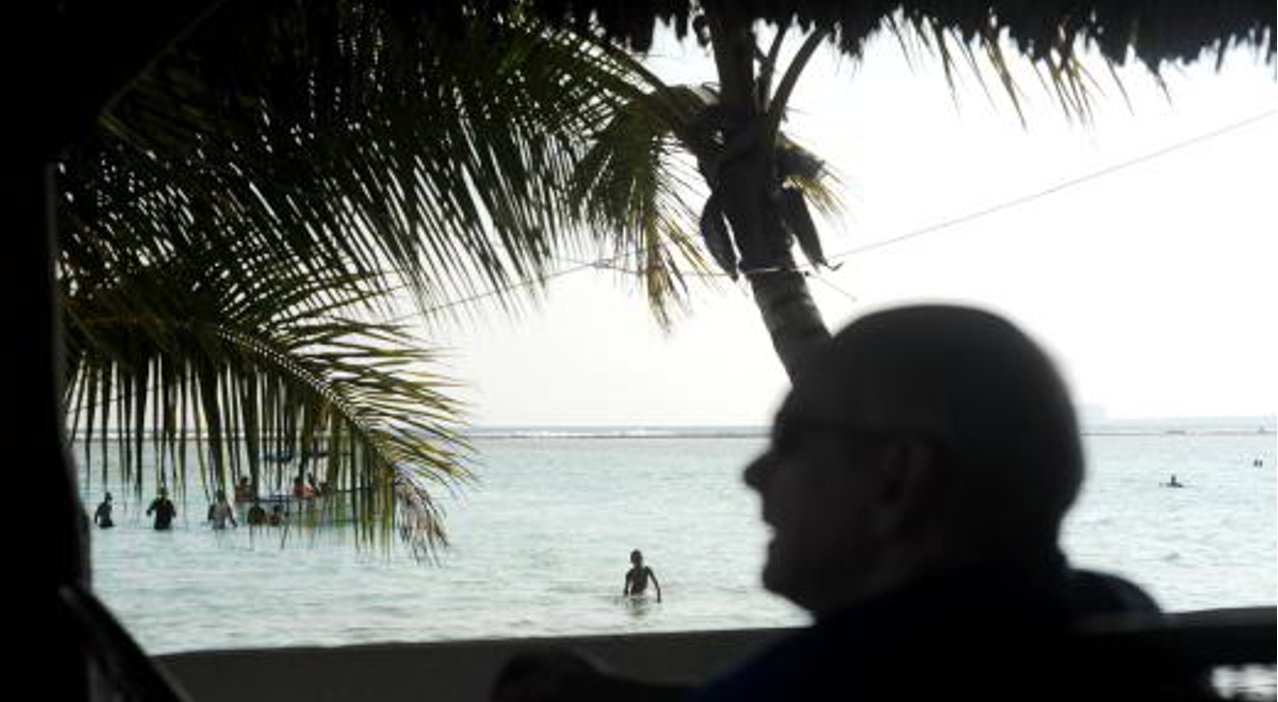
SANTO DOMINGO is cleaner than Haiti, less fragrant, certainly more vertical, and possessed of a certain sterility. The sidewalks are clean. Cabs keep off the sidewalks. The beer is plain, light and flavourless. In Haiti the beer is a lager, called Prestige, and it is malty and yeasty and rich. In Santo Domingo the beer is a pilsner called Presidente, and it is thin and pale and metallic-tasting.
Also, the false bravado of “Prestige” as a beer name is matched by the oily muscle of the Spanish word for president. In the Dominican Republic, a Presidente is a sometimes unfortunate apparition. We arrived near the elections to the national assembly and every poster suggested a nicely scrubbed suburbanite who’d had his or her campaign photo taken at the same place that does the local yearbook.
That this is progress is borne out by the fact that the city was once called Ciudad Trujillo, overseen for 31 years by a military dictator of unsurpassed fiat and vanity.
To speak the name Rafael Leonidas Trujillo Molina is akin to shouting "Voldemort" at the Hogwarts dining hall.
I ask about Trujillo. Where is he buried?
Kennedy doesn’t know. The waitress names a town, San Cristobal. He was born there.
“There’s a monument where he was assassinated,” says Buder. Talk goes round. Turns out the monument is to the assassins.
Trujillo was, by the most sympathetic accounts, a megalomaniacal wack job. He took to renaming things after himself. When Santo Domingo was flattened by a hurricane, he ordered it rebuilt as Ciudad Trujillo – Trujillo City.
It was about Trujillo that Cordell Hull, the Secretary of State for FDR, famously said, “He’s a sonofabitch but he’s our sonofabitch.” Trujillo fancied himself the west’s premier anti-communist. Indeed, communists did not enjoy long lives when, real or imagined, they were spotted by any of the half-dozen secret police agencies that spied on Trujillo’s enemies and each other. He plotted to murder the President of Venezuela. When three sisters from the Mirabal family got too loud in their opposition, he had the three of them stopped on the way home from a visit to their imprisoned husbands, taken to a sugar cane field, and beaten to death.
He became such an embarrassment that, when it kicked around the idea of killing Fidel Castro, the CIA also studied the option of having Trujillo knocked off. Years later, documents would show that the CIA helped a few wealthy Dominican families arrange to have a crew with machine guns overtake his 1957 Chevy as he drove to one of his homes. On May 30, 1961, the self-declared premier anticommunist was ventilated. On Trujillo’s passing, the Dominican Republic’s elected president was forced to assume the actual duties of office, rather the way Dwight Eisenhower bravely took the national helm after the passing of John Foster Dulles.
“Un tyro,” a cabbie assures me later. “Si. Monumento!” He chortles merrily. They put up a monument to the assassins. This happens on occasion. For years, a set of footprints were set in concrete in the pavement at Sarajevo with a plaque that once declared, “Here, Gavrilo Princip stood and struck a blow for freedom.” Princip shot to death the Austrian Archduke Franz Ferdinand and his wife. World War I followed. Footsteps in cement have a bit of reach in the world.
On the spot where Trujillo was air conditioned, a plaque next to some sculpture honors “the men of steel” who killed a dictator. Trujillo’s son Ramfis rushed home from Paris to have the plotters killed, before he, too, was driven into exile.
As it turns out, Trujillo himself is a corpse in exile. At first, Ramfis took him back to France, where he was buried at the Pere Lachaise, the cemetery that manages to endure the presence of Jim Morrison, but which spit Trujillo out in 1970. Now, alongside his son, he haunts a crypt in Madrid. Some locals celebrate May 30 as a personal holiday. The three Mirabel sisters adorn the $200 Dominican note, which can be worth anything from $4.50 to $7 American depending on the street here. Nothing on this island appears to be settled