Someone to watch over me
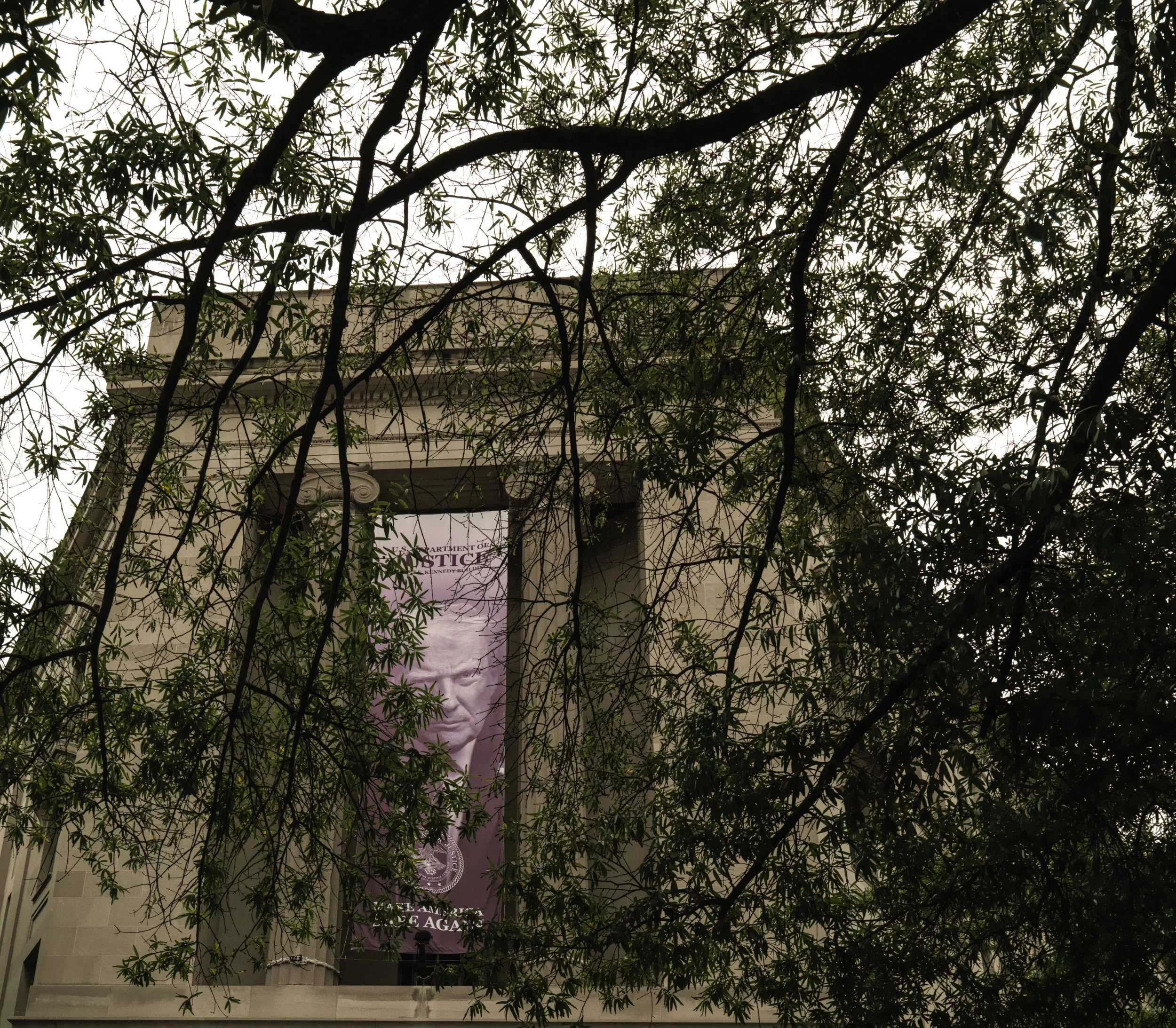
The feeling of being watched changes people. It’s why political campaigns assign agents to track political candidates – and sometimes their families – with cameras. No campaign platform can out-shout an unflattering video. Humiliation is a powerful tool. So is state surveillance, which lets the occasional dissident know they’re being watched by someone with the power to break them. In a city already flooded with cameras at every corner, a set of banners with a glaring supreme leader reminds everyone of who’s in charge around here.

The boorish display of authority in the capital is inescapable. Fluttering yards of cloth with Donald Trump’s face above the campaign slogans that are usually retired after inauguration day are there day and night. Trump has either missed or embraced the unnerving parallel to dictators of yore. He puts his name on anything he can reach and never veers from whatever narrative he’s pushing.

I have visited the District of Columbia for more than 50 years. Of late it has it come to resemble 1950s Santo Domingo, where a strongman named Rafael Trujillo enriched himself, set the police on his enemies, and named mountains, monuments, streets and bridges for himself. The capital city spent almost 30 years as Ciudad Trujillo. After Trujillo was machine gunned enroute to one of his ranches, Dominicans started calling their capital Santo Domingo once again. Then they erected one more monument – this one to the assassins – and stumbled back into democracy. It took years to get there.

Dissent is still loud in America, though protests seem futile. A supine Supreme Court has allowed Trump to pretend that he is his own Constitution, with no branches other than those that obey him. Protesters are shot and then accused of being the assailant. Racism is excused.  Felons are pardoned after donating millions to Trump’s campaigns. Through it all, the new names become increasingly Orwellian: The Gulf of America, Lake America, The Department of War, The Donald J. Trump and John F. Kennedy Center, "Super Intelligence" for the weird and uncontrollable technology that poses a threat to human existence. Trump’s nativism is in full bloom on the side of the Department of Labor Building, still named for Frances Perkins, the secretary under Franklin D. Roosevelt. I noticed that and wondered if anyone has told the current president who she was.

I wonder still if most Americans know who we used to be.
WASHINGTON

Bungee jumping with Colin and Abigail
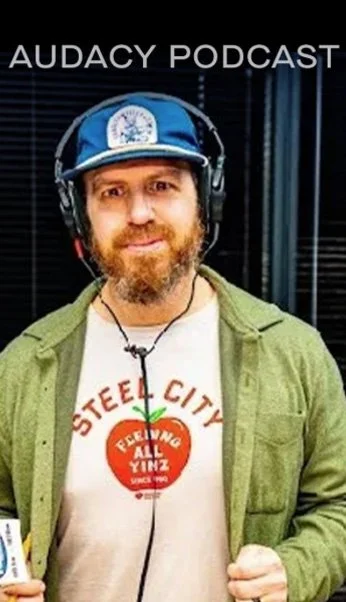
The high-end bum fight between radio host Colin Dunlap and county communications director Abigail Gardner proves that it is still possible to hyperventilate without oxygen. It is a contest so beside-the-point one imagines it was a planned summer entertainment.
The belligerents
Abigail Gardner is the Allegheny County director of communications. That is to say, she is in charge of making Sara Innamorato, the County Executive look good. It has been a challenge. Innamorato has raised taxes, poured out wage and salary increases taxpayers can’t really afford, and most recently proposed an 18-week family leave ordinance to be funded solely by private sector employers regardless of size.
Colin Dunlap is a very good former newspaper reporter who has since moved to talk radio, which is to say his job is to stir up a fuss, make the station’s phones ring, and keep score by how thoroughly he is attacked. I have known, worked with, fought with and occasionally faced-off with Colin Dunlap. He is a man who would get into a fight with a stop sign. I predict a long career.
The background
Dunlap recently struck a rich vein of performative indignation when Gardner posed a video online suggesting he should jump off a bridge. Telling someone to jump off a bridge is as American as apple pie. Doing so in a city where, a generation ago, despondent unemployed industrial workers actually were jumping off bridges, struck a special nerve among the especially sensitive.
Gardner’s outburst was at worst unseemly, though I doubt even that. I personally have been banned – then reinstated with apologies – from the “X” platform I still call Twitter, for telling someone to jump off a bridge. Somehow, freed of the mindless tyranny of an algorithm, someone figured out that I was joking.
Gardner was angry at Dunlap for many things, not least among them his on-air and online speculation that Innamorato was pregnant. After she confirmed that she was Dunlap asked if Innamorato’s family leave proposal was timed to benefit her when she gives birth.
There are many good reasons neither Innamorato nor Gardner wanted to engage Dunlap on the subject of her pregnancy, not the least of them being that it’s really nobody’s goddamned business.
The main event
What they could, and did, respond to was Dunlap’s suggestion that health authorities were overreacting to the haze of wildfire smoke that drifted into the city from Canada. He posted a photo of men in fedoras lighting up cigarettes amid the industrial smog of the city’s industrial heyday.
“Some of our grandparents lived this every single day here - and smoked a pack a day on top of it,” Dunlap posted.
Gardner, savvy communicator that she is, posted a video snarking at Dunlap and suggesting he said Pittsburghers are “soft” (we are, but he didn’t say it) and “overreacting” (we are not) and then said this, in a video sure to haunt her:
And to that I say, You're right. Colin. You should go outside and smoke a pack. On a bridge. And then jump off. Have a great weekend, everyone.
Most of us did have a great weekend, though Gardner was unable to fully savor the festivities. She spent her time coming up with an explanation for why she had opened herself to accusations that a county official had essentially told Dunlap to kill himself.
It was a grandiose overreaction. Gardner told him to jump off a bridge but never asked him to drown. It was merely an attempt at biting humor that was out-of-place in the woke and trauma-informed world of today’s garden-variety urban Democrat to whom every unwanted taunt is the equivalent of a fatal curse that must be exorcised with trigger warnings. At least one news story about the rumpus included advice urging the vulnerable to dial 988, the national suicide prevention hotline.
This disruption in the political atmospherics was disorienting. Conservatives were suddenly triggered with the exaggerated sincerity of a World Cup player rolling on the pitch faking an injury.
Gardner had strayed from the left’s precept that we’re all victims, all vulnerable, all at risk of falling into despair at a hard word, and jumping off a bridge when someone raises the option. She issued the following apology:
I made a tasteless comment out of frustration, and I apologize for my lapse in judgement. Suicide should not be a topic that is joked about or used to insult others. My comments were out of line, and I especially apologize to the employees of Allegheny County that I did not hold myself to a higher standard while representing the county.
Two things are clear. First, Gardner’s mistake was not in attacking Dunlap, but in doing so in a way that could give her political constituency alarm that she was straying from the true faith. Second, anyone without a tin ear could tell she wasn’t especially sorry.
The dénouement
On Monday, Gardner was on “administrative leave” while Innamorato’s administration conducted an in-house investigation. What remains to be learned about the episode one cannot imagine. The whole thing was played out on radio and an online video. Protocols of the woke, though, call for a full performance, so an investigation it is.
It was unclear whether Gardner, who is paid $160,000 per year (her predecessor was paid $128,000) would continue to draw her pay during her administrative leave. The county’s human resources department, skilled at hiding behind “personnel issues,” has declined to say.
The spectacle of an overpaid and hyperpartisan bureaucrat engaging in a ballet-of-contrition with a radio talk show host is entertaining so far as it goes, but the narrative really has no place to go from here. Dunlap is unrepentant and means it. Gardner is penitent but likely doesn’t mean it. Local politics will make little progress so long as we view bridges as less suited to uniting than jumping off.
The Royal Wedding
TAYLOR SWIFT AND TRAVIS KELCE, two people accustomed to arena performances, chose Our Lady of Madison Square Garden for their nuptials. Adam Sandler performed the wedding ceremony. I know, but that’s what they’re reporting. Many a truth is said in jest, but it should not make the jester a clergyman.
The Swift-Kelce wedding is a return to ballyhoo on a cosmic scale. The country’s burning down and we are enraptured by a mega couple of unlimited means who rent out Madison Square Garden for a wedding worthy of the Gilded Age. I would bet cash money the whole thing was professionally filmed with an eye toward someday marketing the thing to Netflix.
This wedding should have been pay-per-view. The commemorative plate industry could have done land office business. Royal weddings spawn all sorts of licensed products from tea towels to costume jewelry. Now we’ve got one and the question is how the bootleg merch trade is going to respond.
A celebrity studded guest list such as noted by the media, leaves me to wonder about things. Has this couple no ordinary, non-decorative friends? Do they live atop Olympus? Why are we fawning over celebrity billionaires when the nation is falling apart? Was Jay Gatsby invited just in the spirit of the thing?
The description of who wore what evokes Hollywood coverage of Liz Taylor and Richard Burton. ESPN, a sports channel, reported the following:
The bride and groom tied the knot in custom looks created by Christian Dior Haute Couture, designed by Jonathan Anderson. They also donned custom shoes made by Christian Louboutin. As for jewelry, the bride wore Cartier.
It is doubtful the newest royal couple will descend into the blowsy finale of Dick and Liz. Some people get too rich to fail. My abiding fear is that the star-struck press will now press ahead in search of the celebrity divorce story.
Defenders and fans, usually the same thing, will quickly note that in the runup to Friday night’s ceremony, Swift and Kelce donated tens of millions to assorted charities. Generosity is good. Done after the fashion of potlatch – a ceremony of lavish giving by northwestern tribes to demonstrate wealth – charity can seem a mere extension of personal grandiosity. From Newport to Palm Beach, we have seen this pattern of excess and it never ends well.

A stillness at 250
FIFTY YEARS AGO, my editors assigned me to cover the American Bicentennial in the small coal town where I worked as a reporter and photographer for $125-a-week. It was a piece colored in optimism. Tall ships sailed into New York Harbor. The three networks and dozen local stations aired “Bicentennial Minutes,” in which people spoke of the history of the region. I recall mentioning sparklers in the hands of backyard patriots.
We had just come out of an unprecedented scandal that drove one president from office and left the nation under the hand of an unelected executive who somehow managed to instill calm during a rickety economy. We had lost a war in Vietnam and our music had devolved from songs that carried a message to ones that demanded a leisure suit and heels. The future was uncertain, the present plain to see.
So, the Bicentennial came as something of a grace note for a nation surprised at its endurance. It was a small town, but the talk reflected what I was hearing and reading from the far corners of the land. It was easy to be a backyard patriot back then and, frankly, it felt good. We were exhausted by politics but not especially angry. The people I spoke to invariably said “they’re all crooks,” but they were crooks we could endure because the one thing they didn’t steal was our confidence that democracy, though dented, was intact. There were some things Americans did well and self-acknowledgment was high on the list of our skills.
I now live 80 miles west and 50 years past of that beer-soaked stretch of America. My neighborhood is quiet. Surprisingly few flags have gone up along my street. Such decorations as are to be found would have disoriented my countrymen of a half-century earlier. Halloween is a big event here and people love to dress up their yards with plastic skeletons and it is little wonder they are repurposed as a salute to a nation with cancer of the body politic. Halloween is, after all, about certain grim finalities.
It is easy to remember the opening paragraphs of The Declaration of Independence and easy to overlook the list of grievances cited by the founders as the reason for the schism. At a moment when armed National Guard troops patrol the streets of the capital, the stationing of troops in the colonies invites comparisons, not contrasts. Government by fiat, the disdain for the courts and legislatures of King George, and their parallels to a president willing to let a housing bill die unless he is allowed to restrict voting rights are disturbingly synchronous. This is not a resurgence of Jacksonian governance. It is a rebirth of autocracy.
The stillness surrounding this year’s 250th anniversary of independence calls to mind the words of Alexander Galich, an exiled Russian poet: “What is said in a whisper, thunders.” When federal agents barge into a polling place to instruct a woman to take down an online posting calling for the arrest of a man who shot a woman to death on the streets of her town, it’s little wonder that this Independence Day arrives not with shouts but whispers. People are afraid. What we thought was an ironclad guarantee is now a tentative hope. Democracy slept for two generations in Greece, the land of its birth. Our fondness for right-wing dictators was spurred by a realpolitik that is now being practiced on our own people. One wonders if, like a house permitted to decay, we can still say of our nation, “It has good bones.”
Pittsburgh Tribune-Review
Tropic of Cancer
TWENTY TWENTY-SIX became my cancer year. Apparently, my prostate wasn’t getting enough fresh air. It soon shall. Among cancers, especially those starting with a “P,” mine is so treatable I can go on as if nothing much has happened. That said, sometimes cancer’s wanderlust gets the better of it and a team of oncologists must chase it from head to toe. That is the cancer I hope I do not have. At 72 a man can use another decade to prove himself, leave a legacy, or at least get even. The only way humans endure life is by ignoring the fact that theirs will end. The number of people dying without wills is not a failure to plan. It’s a sign of faith.
Cancer has been around for millennia among humans and eons in other species. As James Joyce’s protagonist Stephen muses in Portrait of the Artist, “Canker was a disease of plants and cancer one of animals.” Archeologists have found the latter in mummies. Hippocrates gave it its name – carcinos – and was the first of many physicians to misidentify its cause. He said it was triggered by too much bile. That is, of course, nonsense. Fox News is caused by too much bile. Later medical practitioners suggested the fuzz on peaches was the culprit. One quack, Harry Hoxsey, drifted through my home county 80 years ago promoting a cancer cure that succeeded in fooling the borough of Portage, Pennsylvania. They supported the establishment of a clinic the feds later raided. Paleontologists have found cancer in dinosaur bones. Cancer predates the humans it afflicts. The disease was not prevalent in cave dwellers if only because the life span of early man was so brief that cells didn’t have time to mutate. Age and cancer seem to be of a piece. At my biopsy appointment I was the youngest guy in the waiting room. I’ll be oldest on the operating table.
Along with possible spread, a few other questions persist. For one, I would like to know why Facebook seemed to know I had cancer before I did. The answer, I am told, is found in the word algorithm. After a routine blood test sent me in search of a urologist, I looked up a few things on the Internet. Before the biopsy was done, I was being served ads from people no more qualified to address the causes and prevention of cancer than my local greengrocer. A board-certified orthopedic surgeon who graduated from a college of osteopathic medicine is advertising something — I’m not sure quite what, because I don’t care to click on the ad. Another ad tells me it might be an infection. In due course I was served an ad for malpractice attorneys, as if my illness had completed its cycle without me. I was fed an ad from the American Cancer Society inviting me to join in a fundraiser in which I take a photograph a day, share my “cancer journey,” and ask Facebook friends to donate for research and to cover treatment for people in straitened circumstances. This appeals to two vanities at once: my conviction that I am a good photographer and my propensity for oversharing. That said, my posts received lots of sympathy emojis, but not much money.
Absent the woe-is-me photography, I have little say in how to deal with cancer. I watched as it killed off family members and came to realize early in life that one doesn’t really fight “a courageous battle” with cancer. You ride it down to its conclusion or to yours. Words are unavailing. I cannot invoke property rights and evict cancer. I cannot argue cancer to a halt. I will be treated by a hospital affiliated with an oncology center named after an old friend and political source. She died of cancer, but from the grace she displayed in life I feel optimistic being treated under her name.
Cancer has lost some of its awesomeness, if one interprets awe by its root meaning. Awesome and awful are first cousins, and I remember in my newspaper days arguing with funeral directors who did not care to offer a cause of death, even though newsroom rules required it. Often as not they were hiding the fact that the recently departed had died of cancer. The disease possessed a certain shame, as if the hand of God had reached down and flicked them off the Earth like a table crumb. In 1996 I sat with a group of reporters while traveling with the Robert Dole presidential campaign. Then-Florida Sen. Connie Mack, the grandson of a legendary baseball manager, had impressed everybody with his amiable nature and grasp of policy. What about Connie Mack as Dole’s running mate, somebody asked. A few eyes rolled and a table mate replied: “Cancer survivor.” Everyone at the table conceded that it would be a problem. Cancer carried such a stain that even surviving it somehow disqualified a man from public trust.
Cancer’s randomness drives people to find meanings that aren’t there. Susan Sontag, who wrote about cancer and then died of it thirty years later, said “Nothing is more punitive than to give a disease meaning – that meaning being invariably a moral one.” Little wonder more than one funeral director fought with me over naming a cause of death for people whose passings they nonetheless wanted me to publicize. The stigma has worn away to some extent and cancer is now among nameable causes of death. To say someone died of AIDS was to suggest a punishment for their carnal ways. Cancer is punishment only for smoking. That’s not the case with prostate cancer, which seems to track with age, not personal vices. Cigarettes, after all, go in one’s mouth.
More than a hundred years ago, two distant relatives of mine were put on trial for murder. (They were then hanged.) One, apparently incoherent and addle brained, was described in the papers as thought to have “a loathsome and incurable disease.” I would imagine they meant syphilis, which in its late stages destroys the brain. Syphilis is, of course, wholly curable in its earlier stages, thus we find little need to talk around it because it’s not around, at least for long. Against the backdrop of new and horrible diseases, Cancer became less morally freighted. Someone with the diseases became a cancer “sufferer,” rather than a “victim.”
Only 1-in-44 Americans with prostate cancer die of it. That said, it’s still the second leading cause of cancer death for American men. So, it’s dangerous in the way having a poisonous snake loose in the house is dangerous. Catch and remove and you’re good, so long as it hasn’t left behind offspring. That’s the gamble and I hope my doctors are busting up the dice game in time.
There is the question of whom to tell and when. I’m 72, largely retired and, to be honest, my cancer is currently the most interesting thing about me. Friends are alternately fascinated and horrified. Most want to help in some way and there really isn’t one. This is surgery is so pedestrian I am left to wonder how long before it’s done at a kiosk at a shopping mall. Still, there are all sorts of unpleasant transitions ahead, including one week with a catheter, months, regaining muscle function, and the jackpot question about one’s sex life. All of these are surprisingly inconsequential. It all sorts itself out. What remains implacably mysterious is the disease itself. We know of treatments but not cures. For the remainder of my life, doctors will be on the lookout for an intruder that doesn’t announce itself and often departs with its unwilling host.

When the truth is complex
and the facts are delicious
Harrisburg is the perfect crime scene, reminiscent of those movies in which a powerful desperado shoots someone on a crowded street and somehow nobody sees anything. That is how the Pennsylvania government functions. Nobody wants to borrow trouble by being candid. It’s bad manners.
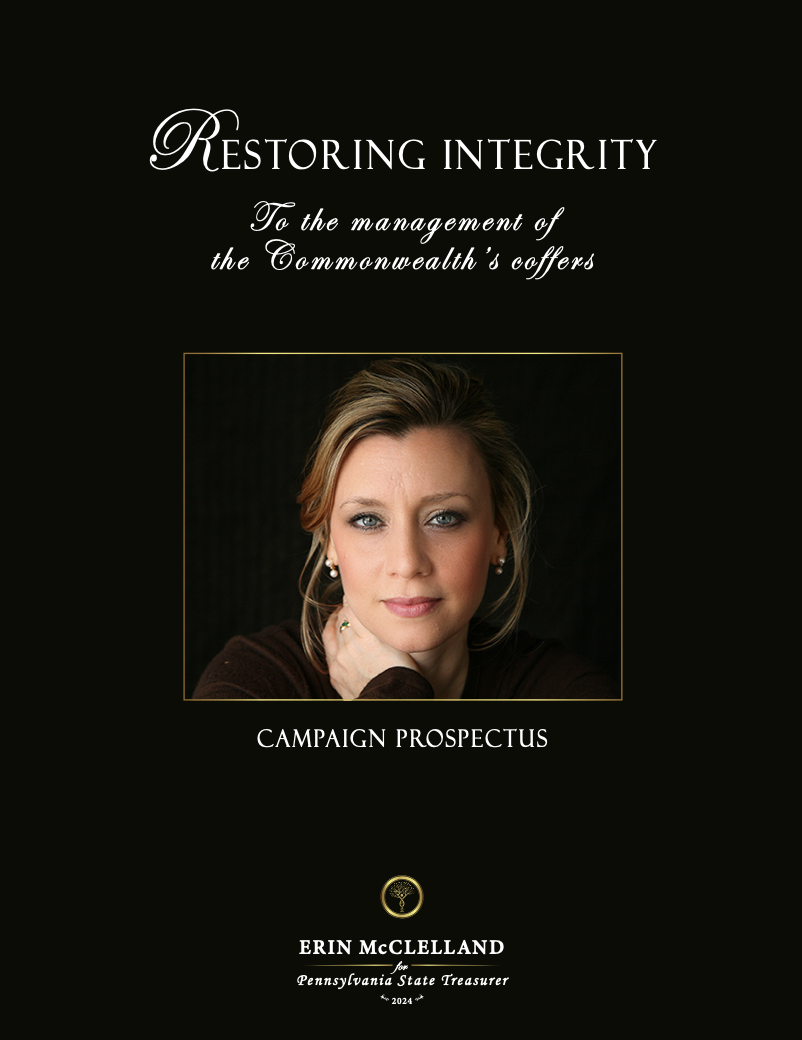
Bob Brooks, head of the firefighters union and a candidate for Congress, knew better than to detail something that was obvious: why his union endorsed Republican State Treasurer Stacy Garrity for reelection over her Democratic challenger, Erin McClelland. It wasn’t just the firefighters. Other unions endorsed Garrity, and every one of them is an ally of Democratic Gov. Josh Shapiro. Speaking at a campaign event, Brooks said Shapiro specifically asked the unions to endorse Garrity over McClelland, whom the governor clearly dislikes. An indignant Shapiro – his spokesman, actually – angrily denied this. Brooks quickly fell in line and denounced himself as a liar. Actually, what he said was he “misspoke,” a denial akin to John Wilkes Booth saying he “misaimed.”
Brooks is at least partly correct in his vehement denial of his own remarks. I doubt that Shapiro asked the unions to not endorse McClelland. He has people for that sort of thing. I had a ringside seat for this falling-out because I was a consultant for Stacy Garrity. She had only to sit by and watch. Josh Shapiro did not take kindly to a number of things about McClelland, starting with her invocation of a sex harassment scandal in his administration, the fact that Harrisburg oddsmakers viewed her as a flake, and her breathtaking failure to understand who was in charge of her party. Shapiro, as governor, was the highest ranking and most politically powerful figure among Pennsylvania’s Democrats. His command of public opinion bordered on the magical.
Sticking a finger in his eye over a sexual harassment scandal at the top ranks of his administration was the job the Republicans were supposed to do, not a three-time political loser whose greatest appeal was to the performatively liberal newspaper editorial boards and readers of The Nation magazine. Shapiro was in the running to be Kamala Harris’s vice-presidential running mate in 2024. McClelland issued a lacerating Tweet about the harassment scandal, then endorsed North Carolina Gov. Roy Cooper. She did this to the gasps of Shapiro allies, any one of whom could read the room and act accordingly.
David Lawrence, a glowing specimen of the machine politics at which Shapiro is so adept, once knew very well never to send a letter, nor say what could be winked. Some folks a few rungs down from Shapiro got the message as if through telepathy and put out the word. Nobody needed to figure out how Shapiro felt about McClelland.
There was, too, the boiling cauldron of Middle East politics. After Hamas massacred thousands of Israeli citizens in a sneak attack in October 2023, Garrity announced that she was putting another $20 million of Pennsylvania investments into Israel Bonds. It was a sign of solidarity and a fairly safe investment given Israel’s uninterrupted history of honoring those obligations. McClelland immediately jumped in with angry warnings about Garrity investing our money in a foreign war. Unapologetically supporting an ally after a horrific attack should not have excited ire at the time. This was well before the war mutated into the intractable mess in Gaza. Remember, this is around the time “Zionist” became the anti-Israel crowd’s code name for any Jew with the wrong politics. Shapiro would have seen that and, while it’s not a deal-breaker, it’s another bit of tinder on the fire McClelland lit under herself.
Throughout 2024, I heard rumblings from the Democratic establishment about McClelland’s other baggage. She exaggerated her record of success as a businesswoman. Her drug treatment facility, which she said won perfect scores in state inspections, was, in truth, called out on a number of deficiencies. She had run for Congress twice and left behind $54,000 in unpaid bills. The Federal Election Commission took the rare step of dissolving her Congressional campaign committee after she repeatedly failed to file legally required reports. Those are not unprecedented failings, but hardly the credentials someone wants to carry into a campaign to be a state treasurer. She accused Garrity of investing state pension dollars in the Saudi stock market. The 15 members of the Public School Employees Retirement System had voted to allow their investment agent, Mellon Bank, to do business in Saudi Arabia, but no direct investment was made.
McClelland talked about starting a state bank, a move that would have placed us alongside North Dakota, the only state with a government bank. The Bank of North Dakota was founded in 1907 to provide at-cost financing to struggling farmers and now partners with local banks to underwrite projects – something the Pennsylvania Department of Community and Economic Development does already. Anyone who has spent more than 40 minutes in Harrisburg knows the implications of creating another layer of lush government sinecures in which governors and legislators could park old friends.
In short, 2024 was a year so Republican that Garrity almost outpolled Donald Trump in the November election. Democrats were splitting themselves apart over Israel, a habit they have yet to drop. McClelland’s articulate manner fooled editorial boards and assorted progressives, but she had to run against her business failures, overblown claims of success and a seeming inability to follow electoral finance regulations put in place by her own party. It was not a question of McClelland losing; it was by how much. Now, Bob Brooks has created a controversy that hinges on who is or was lying. That Brooks created this fuss at the very time Shapiro is about to run for reelection against the same Stacy Garrity he is accused of having helped reelect, is so delicious one would think the chef had mistakenly served dessert first.
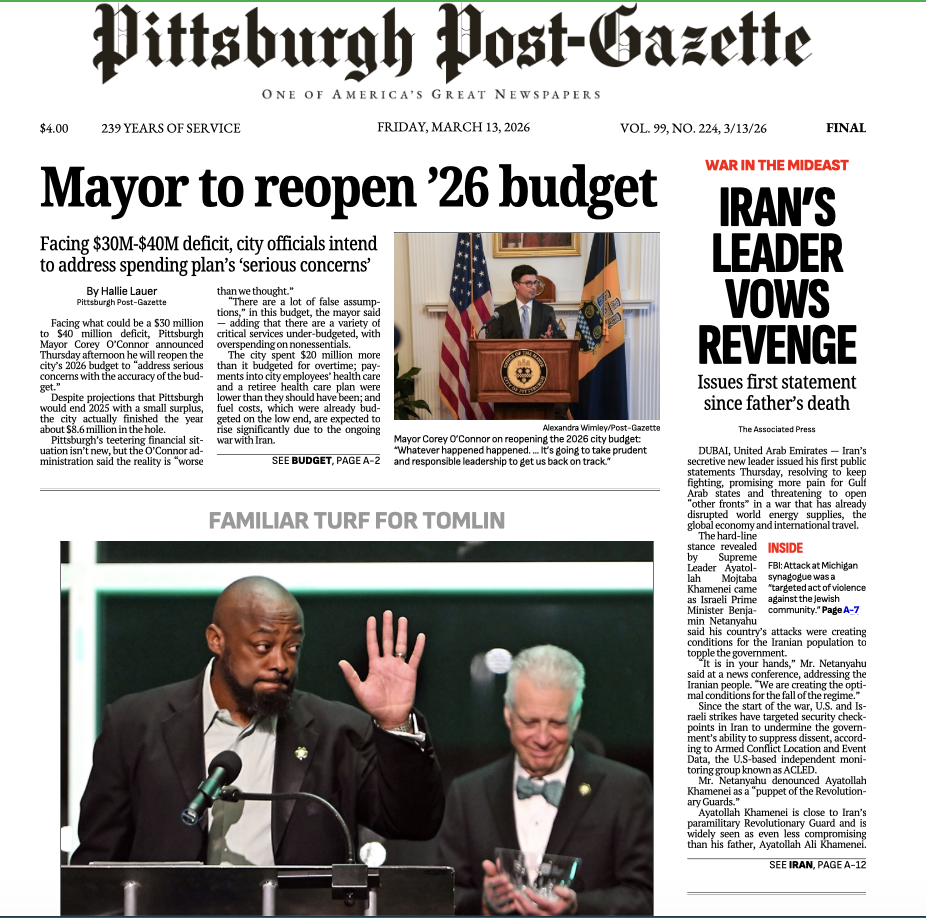
Can you find the coverage of the sale? Neither can the rest of us.
The Pittsburgh Post-Mortem
For the past four months, those of us still interested in journalism have been breaking our heads trying to figure out what is finally going to happen to the Post-Gazette and, by extension, to our community.
The background has buzzed with talks about a buyer in the wings after a shortlist of potentials, ranging from the adequate to the terrible. I want to be clear about this: no serious journalist thinks Alden Capital has improved a single news property it has acquired.
Lee Enterprises, represented by its major investors, the Hoffmann family, sounds plausible.
The Lenfest Institute, fiscal saviors of The Philadelphia Inquirer and underwriters of Spotlight.com, arguably the state’s best news agency, would be a godsend.
The problems are that Alden would basically gut the newsroom, Lee would cut it back considerably, and Lenfest might not have the reserve capital to take on another print publication.
The prospect of Wheeling-based Ogden Newspapers, which gutted a number of newsrooms in the region, is especially unappealing. The city needs journalists who’ll confront the years of neglect and underinvestment by Pirates owner Bob Nutting. A newspaper owned by his family’s company won’t provide that.
There is more to worry about than another hundred or so Pittsburghers out of jobs. The region has already suffered from a dearth of close coverage. Area school boards and borough and township boards, go largely uncovered.
Regional sections, “the zones” as we called them, are no more. Journalism has been called the first, rough draft of history, but in the case of suburban communities and institutions, it is the only draft.
The disappearance of a newspaper is more than vanishing coverage of the assorted car crashes and cheap political scandals. A newspaper is a sort of community forum, assessing the arts, covering business, and, of course, filling Pittsburgh’s cultish appetite for sports.
The Post-Gazette of the past three or four years has not been terribly good, nor has it devolved into the ragbag of incoherence many of us feared at the strike’s outset. For every overwrought and rococo account of Century Three Mall there was the occasional surprise from its investigative unit.
Certainly, its editorials have been as good as I remember them being under the long-gone Michael McGough, who brought a level of scholarship to the paper’s opinion pages in better days. That confers high praise on Brandon McGinley, though I mostly read the other contributors there for the cheap adrenalin rush.
So, what is about to follow matters because people are already stupid enough. We don’t need to exacerbate it by taking away what can at least, if only in theory, be a vehicle for confronting power and elevating its community. Those used to be the major social functions of newspapers. Nowadays, it’s mostly a platform for the city’s taste for fawning reportage about our mediocre sports franchises.
At present, I can say that what little has found its way outside the building suggests a halving of the news staff and instructions for people already on the payroll to reapply for their jobs – regardless of who, if anyone, buys the company.
Powerful non-disclosure provisions are in place, whether by writ or mutual agreement. Every week comes word that an announcement is imminent. That was the case three weeks ago and I worry it will be the case three weeks from now, when the Post-Gazette “ceases” publication on May 3 as per the spiteful decree of its current owners.
It strikes me that each side wants a long-enough buildup to the announcement to forestall anybody who might decide to become an obstacle to the deal. That could come from inside the Block Family, the News Guild, whose members are owed money by the Blocks for abrogating a standing contract, or from some community Pecksniff who wants to see their name in the Tribune-Review.
It will have to be the Tribune-Review because anyone who has read the Post-Gazette’s strike coverage knows they’re not particularly aggressive in questioning the company side.
So here we have it: a newspaper is up for sale and nobody has cracked the code as to the buyer. This matters because folks need time to absorb this information and settle on whether to trust them. The first measure will be how any purchase is covered, including a dispassionate account of the controversies that led us to this moment.
So far, the current owners haven’t given anyone cause to be hopeful. Certainly, we’re not being informed, and that’s their job.
The Madness of King Donald
The moment evil and madness become indistinguishable was given throat by Donald Trump Easter Sunday when he announced plans to commit war crimes to go with his crimes against grammar and usage.
Here, unexpurgated, is the president’s post:
“Tuesday will be Power Plant Day, and Bridge Day, all wrapped up in one, in Iran. There will be nothing like it!!! Open the Fuckin’ Strait, you crazy bastards, or you’ll be living in Hell – JUST WATCH! Praise be to Allah. President DONALD J. TRUMP.”
As part of a war strategy, Trump has pledged to attack civilian infrastructure necessary to sustain life. His familiarity with the Geneva Conventions seems based on what he learned from reruns of “Hogan’s Heroes.”
Targeting infrastructure to inflict harm on the civilian population is unacceptable by even modern standards of warfare. We can write that off to Trump’s evident amorality. What should more deeply concern us is what followed: All caps shouting; exclamation points that outnumber the sentences. There is, too, the unavoidable matter of what the sensitive would refer to as “the F word,” though it would be well if the mainstream media dropped the pretense and ran Trump’s outburst verbatim. People need to see how far this has gone.
There is much to wonder when Trump uses the term Fuckin’. That’s what it sounds like when you’re shouting. Typing a “g “is easier to type than an apostrophe. He went out of his way for this usage, redolent of bravado and testosterone.
Too, there is the curiosity in choices of capitalization. He refers to the Fuckin’ Strait, as if that were a proper name. This is downright Germanic capitalization. He also clearly believes in hell. He capitalizes that, too.
The wag in me wants to say the closing line – “Praise be to Allah” – is just the sort of momentary forgetfulness experienced by most elderly men under stress. There are two problems with this theory. First, he knows enough to capitalize Allah. Second, nothing about the posting, in all its rococo construction, hints at stress. This threat was written in lizard’s blood by a man of profound stupidity, absence of both conscience and common decency.
It would be easy to lapse into a diatribe about the general coarsening of American discourse, but then I’d have to remind myself who was writing it. I grew up using some of Trump’s curses in my prayers. The vital distinction is that our momentary and vulgar outbursts usually don’t find their way into statecraft. In Trump’s case they don’t have to find their way. It is their intended destination. If there were a discernable plan with some semblance of higher purpose, Trump’s antics would be novel, but not necessarily pernicious. But there is no evident plan. He is stuck in a war of his making and this is the moment to hope Trump’s panic button isn’t connected to a missile silo.

No longer lost in space
A few hours after the President crashed the Supreme Court hearings about whether we should be an ethno-state, a functioning government agency launched four people toward the moon.
NASA dispatched a crew into space based on that agency’s ability to respect the laws of science for a larger purpose. The launch of Artemis takes us back to the country we were in 1969: riven but aspirational, wealthy but generous, imperfect but working on it.
Today we are wealthy, riven and imperfect and working in the wrong direction. Right and wrong, when codified, can just as easily become the Code of Hammurabi, cruelty writ down with every good intention. We are also a nation capable of sending people to the moon and bringing them home safe.
We now wear watches more sophisticated than Dick Tracy’s 2-way wrist TV. From the Corning Ware in our kitchens to the GPS units in our cars, our impulse to know the universe has been embedded in our everyday lives. This isn’t a matter of things we never could have imagined. We imagined them and then we made them happen.
The difference between the gutter nativism of an administration elevated by the worst among us speaks to something selfish and horrible in the common Americanus stultus. They were the political pigs that had to be fed yesterday, so Trump did a power walk to the Supreme Court to send a message to a few of his appointees.
The first moon launch in more than half a century was left to the same “Fake News” we’re not supposed to trust. They delivered scientific fact and an insight into physics that honor the laws of accuracy.
Trump chose to remain the only planet that orbits itself, tossing in perfunctory congratulations to NASA before launching an incomprehensible speech about what will or won’t happen in Iran, vowing its annihilation and rhapsodizing about the violence like some 1920s Bolshevik philosopher. He bragged about what a short war he has waged, as if he’d perfected the art.
Trump has been looking for some way to reverse the trauma he inflicted on the economy. My retirement is tied up in investments and I have not lost a night’s sleep when the Dow plunged. Trump was never going to let the market down. Trump has too much riding on the market and the robber barons of technology will never allow him to proceed any further. They don’t care if gas is four dollars a gallon. They care that tech shares dropped below any company’s net value. Just wait for the Marines to land.
The smug corruption of the Trump regime, from its erasure of environmental safeguards to encouraging its vanity-addled namesake to put his name on things and his face on coinage, is insufferable. Little wonder some of us are so excited at the image of a rocket escaping the atmosphere so four humans could escape the entire planet.
But we never went to space as a political point, save the sport of beating the Russians there. John F. Kennedy spoke to the aspirational nature of our nation. The quote “because they are hard” became the sound bite. Here’s the full quote:
We choose to go to the moon. We choose to go to the moon in this decade and do the other things, not because they are easy, but because they are hard, because that goal will serve to organize and measure the best of our energies and skills, because that challenge is one that we are willing to accept, one we are unwilling to postpone, and one which we intend to win, and the others, too.
Note that mention of organizing and measuring the best of our energies and skills. Suddenly, the deep reaches of space touched a nation’s culture. The impulse, though, is universal. We were alone on the moon. This time we’re taking a Canadian. Astronauts now come from an astonishing forty different lands. Not a one of them has been caught pointing a weapon back at the planet.
Space, science, things that scare away Humanities majors such as I with all that math, capture the imagination and sense of trust without a one of us capable of plotting an orbital trajectory. But we know that a rocket flies straight even in a curved universe and for a change, someone who promised us the moon delivered. It turns out to be the one government agency that still follows the law, if only because the major one is gravity, the one thing Donald Trump genuinely lacks.

Pittsburgh No Kings Rally, Saturday March 28
Addition by subtraction:
The No Kings paradox
The No Kings Rallies – they were all over the country this weekend – have become rather large and exceedingly gray, which should worry the hell out of the White House. Easily half of the people I saw were over 50 and a few of them clearly mastered their sign making skills protesting wars long in the history books.
It raises the question of precisely how Donald Trump plans to crack down on a legion of senior citizens who are looking for a fight. The man seems to have no idea that he has done more than alienate a bunch of loud college kids he can cut off at the knees with phony civil rights investigations or calling in their student loans. Instead, Trump has managed to enrage members of his own generation. Calling a college kid with a Palestinian flag a far-left agitator only works when their elders can be brought on board the way Nixon did during Vietnam. The demonstrations were organized by a group calling itself “Indivisible.” For once, the name is apt. It also speaks to the problems inherent in a political movement that is an amalgamation of other movements.
These rallies send a message, but they send so many messages that organizers risk peeling away natural constituencies for democracy. Jews who believe the post-Holocaust diaspora needs a homeland aren’t keen about having their anti-Trump sentiments coopted by people who need to read more history. Pro-life liberals – they exist – might wish speakers would stay on the topic of democracy and humanity and postpone the other fights for a time they have restored civil order and rule of law. Centrist voters still hold the balance here and the cause is not going to expand by subtraction.
Reestablishing the old order, by which I mean rule of law, is an abstract idea in need of better definition and clearer oratory. The movement needs an emergent leader on a national level and, to date, I can’t name one. Gavin Newsom’s snarky Tweets and Bernie Sanders’s occasional harrumph just aren’t going to galvanize. A youthful Conor Lamb (disclosure: I married his cousin) spoke eloquently and a little angrily at the rally in Mt. Lebanon, but his platform was pulled out from under him by many of the very suburban liberals who cheered him loudly yesterday but voted for his senate primary opponent four years ago. They need to listen this time and stop electing clown acts who tick off all the right boxes but can’t govern.
There were two bright spots.
First, the angriest protests center on Trump’s maddeningly unjust immigrant roundups. People of my generation might be antiques, but we are sufficiently antique to have been raised with very firm ideas about birthright citizenship, civil rights, and firm assurance that people who come to this country for better lives somehow make the rest of us better people. The sanctimonious few who talk about how their forebears came here legally have no idea how easy it was to come here, mostly because they were white Europeans. Today, missing a piece of mail can put someone out of status and subject to Stephen Miller’s racist fixations. In short, we’re not buying this insistence that immigrants pose a threat. Nary a one of them has stolen my dream job in roofing or landscaping.
The second bright spot is that the protests have broken the middle-class obsession for elevating anything in a uniform into a default hero. Once Renee Good and Alex Pretti were shot to death, it seemed real to people who used to buy into Trump’s “our brave ICE agents” language. One of the most moving accounts yesterday was a letter read to the crowd by an immigrant held at the Moshannon Valley Detention Center, the country’s largest and, judging from descriptions of how guards treated shackled prisoners, one of the most brutal. Ordinarily, people would hear such things and their skepticism would kick in. This isn’t happening anymore. When white people see a masked ICE agent shoot a woman to death and follow it up by shouting, “fucking bitch,” these accounts from inside the prison make sense. Abuse in broad daylight makes us believe the accounts that aren’t on videotape. I was reminded of what happened after Nixon’s secret office tapes were released. The immediate response was pundits wondering what else was going on that might not have been caught on the secret recording system in the Oval Office. That’s what people think when they hear these letters read aloud and the rallies need more of them.
If these thoughts seem a bit rambling it’s because covering the anti-Trump resistance is a great deal like trying to define the contents of a gas cloud by walking through it. Political protests set the stage for change, but they aren’t the change itself. That comes with striking a unifying chord among voters who’ve noticed that something has gone wrong. It also demands a coherent, digestible message that doesn’t split off in a dozen directions before election day.
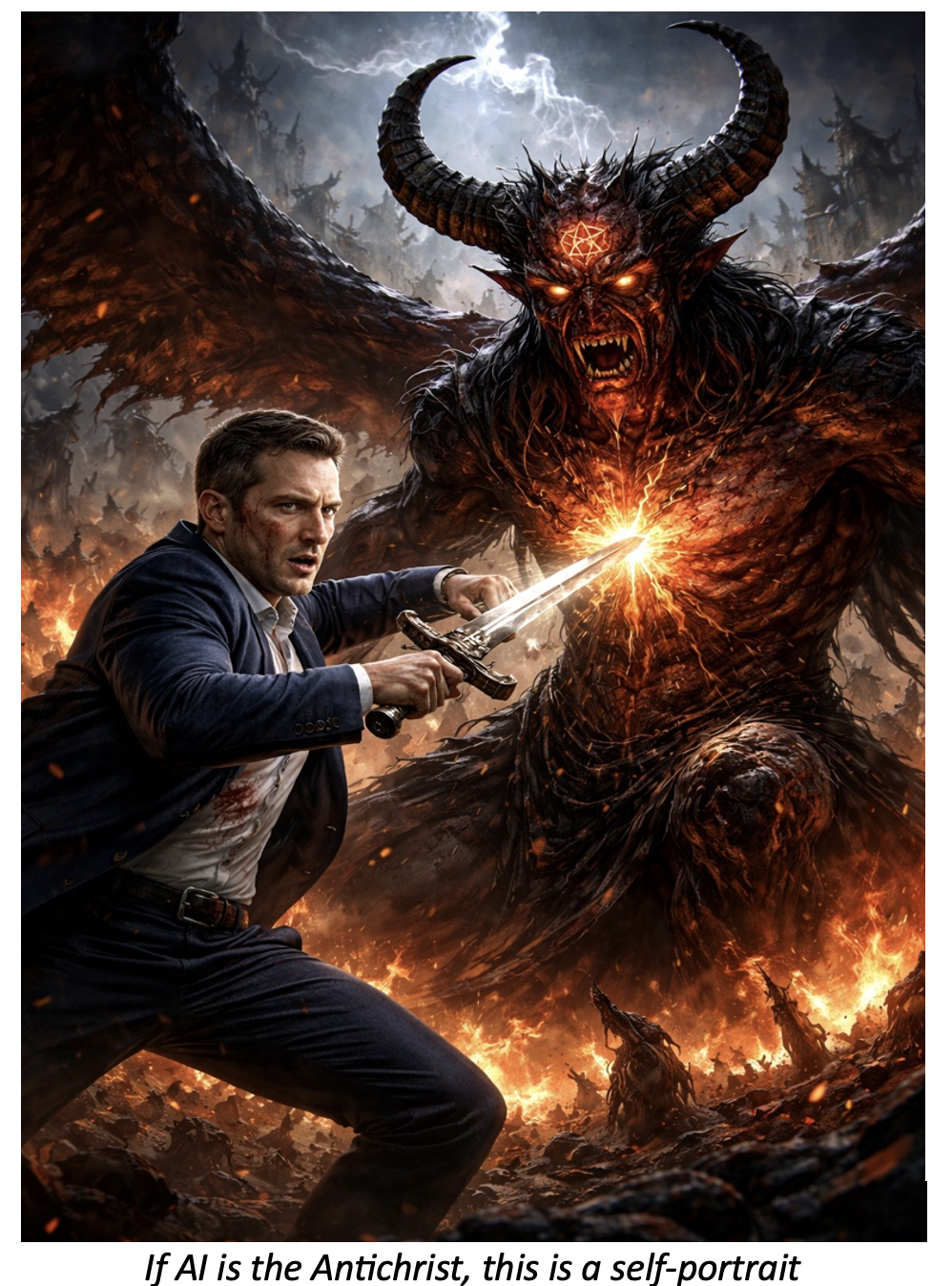
Thou art the wrong Peter
Peter Thiel has been hopping around the planet delivering lectures on the Antichrist, a figure of no passing concern to people who require details of the great beyond and what to pack for it. Thiel believes the Antichrist is enroute in one form or another and when a tech billionaire sees omens he is unlikely to suffer them alone. Thiel recently took his lecture series to Rome, a good venue in which to talk religion, much the way bars are ideal for conversations about sports. This is, after all, the marketing genius who created PayPal. He knows that in the new retail, “Location is everywhere.”
I will not dwell in depth on the foundations of Mr. Thiel’s lectures because they appear to be without any. He’s tossing up The Book of Revelation, the only Biblical prophecy yet to be recorded in the past tense. No other volume of scripture has so excited people who just can’t wait for the whole world to be over. For them, the world’s been ending every few years since the book hit print.
A high school friend’s father was a fundamentalist pastor who thought the complete battle plan for Armageddon could be found in the Bible. There was a reference to the battle at which the blood would flow, “even unto the horse’s bridle.” That’s a lot of blood to get into a given space in a world where battles aren’t fought on horseback. On a visit to Israel, he encountered a valley where a big battle would likely happen and decided, yeah, they could only get down there on horseback. I was skeptical As a teenager I was much enamored of conspiracy theories, UFOs, ghosts and numerology. I played “The White Album” backward several times. Never did I imagine myself on horseback with blood above my knees. Some things you just don’t fall for.
Thiel’s turn as a seer veers from traditional Biblical interpretations. We were told the Antichrist would arrive in human form as in those Chick comics people used to leave on windshields in church parking lots. Not Thiel. He believes that the Antichrist is likely taking the form of the regulatory state. Reducing the Antichrist to a concept of governance leaves out the trumpets and flaming sword. A world swallowed by Artificial Intelligence or the One World Cabal doesn’t seem like something an exiled apostle living in a cave on an island would prophecy. To do so, he’d have to abandon the blood and horses and replace it with an 1800-point drop in the Dow.
Thiel isn’t just lost in metaphor. He believes this is all happening because the Bible says so. His mysticism around the topic borders on the Swedenborgian. He is finding the secret key to scripture. The clouds are whispering. This raises the question of whether he sees himself as one of the young men seeing visions or one of the old men dreaming dreams. (Joel 2:28) Thiel isn’t offering a firm conclusion quiet yet. Rather, he has offered a few notions about some of the important supporting cast. He suggests that Greta Thunberg might be a harbinger of the Antichrist. Mistaking a public scold for a supervillain’s publicist is a pretty wide shot.
Thiel is talking about Antichrists with harbingers from Sweden, when we have perfectly good harbingers ensconced in Moscow and Mar-a-Lago. Thiel, a Trump whisperer also owns the data mining company Palantir, used by the federal government for, among other things, tracking down immigrant families. Its resources are also being used for targeting in the war with Iran – the one that opened with a missile into a school full of young girls. When a man’s bread-and-butter comes from inflicting misery, it is necessary for his self-esteem that others are seen as the servants of the Dark One.
I am not a scholar. I have read the Bible, mostly for Old Testament politics and the racier parts of the Song of Solomon. Pharaoh’s court rather reminds me of the Trump administration. But The Book of Revelation requires either a profound grasp of metaphor or a literal belief that John of Patmos kept a running transcription of Judgment Day. Mixing the two is apt to make the entire thing indigestible. For some denominations it is a representation of the struggle between good and evil. For some it is the directions for programming an old VCR: both detailed and confusing, with a first-try success rate akin to that of early heart transplants. Thiel’s sudden purchase on public discourse about things Antichrist suggests a billionaire who’s given up on acquiring cash and now has time for a hobby. He found one even Kenneth Branson wouldn’t have dared, but it’s no way to run an apocalypse.
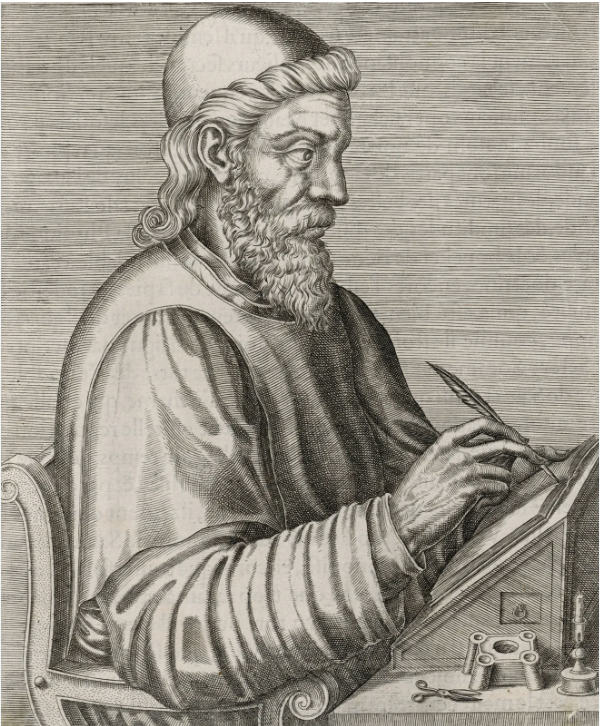
Oh, this is not turning out the way I guessed.
Letters to History
It is one of the lesser-known facts of political metaphysics that a large correspondence has accumulated at the inbox of History. In a surprising number of instances, History replied. Thanks to the intervention of The Venerable Bede, History’s patron saint, we were recently able to obtain a sample.
Dear History: I am president of a small, Caribbean nation that kicked out the Americans almost seventy years ago. It’s complicated, but I’ll admit we were both a little at fault. He was too possessive and I flirted with Krushchev. Anyway, he’s been driving past my house really show this past month. I mean, I know it’s him because he always drives the biggest cars he can buy. Anyway, he’s been trying to freeze me out from all our mutual friends. In fact, when my friend Hugo and his wife wouldn’t shun me, they called the cops on them and trashed their house. Now he’s going around telling friends that if he can’t have me, nobody can. Is there someplace to get a restraining order?
I would tell you to go to the authorities, but I think that’s your old boyfriend. By any chance did you keep one or two of those missiles that everybody was going on about in 1962?
Dear History: I live in a pretty crowded place and the neighbors are always fighting. I mean they’re absolutely trashing the place during these fights. Something to do with religion. People can be such assholes. Lately, they’ve been throwing things across my fence at each other. Is there a polite way to make them stop?
I think I know who you are. I think you wrote me before about the same problem in 1973. And seventy four. And seventy five. And, uh, yeah, I get the picture. And I know I was also the dumbass who promised you it would work itself out. What to say. It seems as if I’m always repeating myself.
Dear History: While I haven’t been able to get entirely back on my feet, I think you’ll be at least interested to know that I’m getting stronger every day and ready to fill my spot in your ever-popular cycles. Oh, to be back onstage! I have to confess, when they hung my boy upside-down in Milan in ’45, I figured this was it. Career over. That’s why you have to never stop believing in yourself. Even when they laughed at me in the 60s, I always knew enough to lie somewhere just below the waterline until I could surface, gulp a little air, and swim to shore. So, what I’m trying to say is, I’m back boss and ready to do my part. Can I maybe have a longer monologue this time?
I’ve been following the shootings in the streets by those masked agents and pretty much guessed you’d got your mojo back by doing a little community theater. Welcome back, you loveable mug, and don’t be such a stranger.

St. Patrick’s day, like it or not
One of my vivid St. Patrick’s Day memories was walking alongside then-Gov. Tom Corbett as he marched in the Pittsburgh parade a dozen years ago.

The corner of Grant Street and Liberty Avenue was especially treacherous that day. A bellowing man in a costume shop red beard and giant, green top hat, led his compatriots in chants of “One Term Tom!” and added something about the governor having “English friends.”

Much of this bellicosity I wrote off to the fact that it was around the hour when the third beer of the morning really asserts itself. Nonetheless, the episode has forever left me with a strong distrust of grown men who dress like leprechauns and shout their politics out of some Encyclopedia of Clichés.

Being Irish in America is to remember sacrifice and past unpleasantness but in ways that give it meaning.

The Ancient Order of Hibernians, of which I am, in late life, a member, doesn’t hold a meeting without collecting groceries for the hungry and focusing on the principles of unity, charity and friendship. They really mean this, by the way. I have written things about the Irish during The Troubles that gave great offense. Not a one of my fellow Hibernians has raised this in the year since I joined.

After the Troubles ended in a ceasefire and the Good Friday Agreement, Gerry Adams, the former Sinn Fein president whose party was the political arm of the Irish Republican Army, turned back an angry critic with these words: “You’re still on the old agenda.” That’s pretty much the only way to move past the agony of the years between 1968 and 1998.

It is often said that the English don’t remember their history and the Irish refuse to forget theirs. It is true that the Irish don’t forget their history, but it doesn’t mean they don’t get past it. They still believe in the future. It is a place that has always punched above its weight. An Island of seven million people has produced nine Nobel laureates in the space of a century. You don’t get that by looking backward.

The Irish in Ireland can be remarkably unsentimental. American visitors are often mortified to find cottages once roofed with thatch suddenly transformed into shingle-roofed ranch houses with additions tacked on. Too often, we like our Ireland frozen in the time when our grandparents left it and, for much of the 20th Century, our ancestral land obliged. This was out of poverty, not sentimentality. They were thrilled to get indoor bathrooms and internet access. The cooking, once the stuff of jokes, has become not just good, but pioneering in its complexity and nuance.

Anglophobia might be a fun way to assert one’s Irishness over here, but over there it had pretty well died out, though I am informed by a fellow Hibernian that “up the rah” sentiment is on the rise. The politics of U2 has been pushed aside by that of Kneecap, a band from Belfast that supports both hardline Irish republicanism and whose onstage antics on behalf of Palestine have led to accusations that they support terrorists. Probably the Hezbollah flag displayed by one member invited suspicion. Partly, one can ascribe this shift in Irish opinion to Brexit. When the British voted to quit Europe in rather the way a seven-year-old runs away from home, it became easier to reject their continued presence on the island. You don’t want to be governed by unserious people. As Prime Minister Boris Johnson was more Benny Hill than Benjamin Disraeli. The Irish who live in Ireland have to decide their future. The musician Paul Brady wrote a song about the Troubles where he mentioned people “trying to carve tomorrow on a tombstone.” This is one they’ll have to decide.
An evening’s revelation
Modern political campaigns are run like hurriedly incorporated companies. The American economy is littered with failed ones. Trump, I suspect, knew how to master such a genre. He was a bustout artist going back to Atlantic City days. He knew the political virtue of promising without consequence. Your bigotry was his policy. Anybody with a modicum of personal ethics wouldn’t be able to beat him. Most current politicians have a modicum, and just that much. It was game over because of one side’s inability to pander. Trump wasn’t Mussolini. He was Eva Peron. Love him or hate him, you’re going to see his show.I considered this proposition while listening to Margaret Hoover and Jennifer Palmieri speak at the Elsie Hillman Women in Politics lecture at Chatham University. Chatham is a small liberal arts college. My father once went there for some sort of union training seminar in the late 1950s, just after it had ceased to be the Pennsylvania College for Women. He brought home a sweatshirt which he wore with great sense of irony. My father also had a memory of one of the speakers’ great grandfather. When Herbert Hoover was seeking his second term in 1932, my father and a few friends went to the train station in Johnstown, Pennsylvania. The great man’s train pulled in and he went to the platform on the caboose and peered into an almost empty lot. In those days, when you despised a candidate, you simply stayed home. Now, you try to ban them. As I recall my father’s story, President Hoover went ahead, gave his speech, and departed for an electoral concussion at the mighty hands of Franklin Delano Roosevelt.Thinking of that rout, I wondered at the resiliency of Donald Trump’s surreal second term and considered the mutual predictions made by the guests at Chatham. Hoover and Palmieri foresee a shellacking for Republicans in this year’s midterms. At that point, Article I of The Constitution will rise from its slumbers and Congress will reassert itself. True, the Republicans of the 119th Congress have been sidekick-level subservient to Trump. It would be hard to replicate their toadying under the Democrats, but the Democrats have to get there and the party’s capacity for self-harm was sitting in evidence. Jennifer Palmieri was communications director for, among other things, Hillary Clinton’s 2016 presidential campaign. Never had stupidity and smug self-satisfaction found a better home than in that campaign. So here they were: the great granddaughter of a good man tossed on history’s trash heap, and the advisor to an equally good woman who jumped onto it. It would be unfair to expect too many surprises from Palmieri’s remarks. She is the James Schlesinger of the current Democrats: summoned to serve in administrations and campaigns. She is standard-issue Democratic politics.'There is no way of knowing
what he is doing
in iran by listening
to what he says’
Hoover, who hosts “Firing Line,” the public broadcasting program made famous by William F. Buckley, is a rarer case. For most people, membership in a political party is a chosen thing. For Hoover it is more of a genetic defect. She does not sound like a Republican of our time. She despises Trump, supports the right to abortion, and thinks her party just now is a mess. She is openly in favor of gay rights. Simply put: she’s a libertarian and, as a Republican in the Age of Trump, audaciously heads up something called The American Unity Fund. I have no idea what it is but put the word “unity” in your name and it’s going to unnerve today’s Republican. If they wanted unity they wouldn’t have seceded from reality. It would be fair to surmise that her Republicanism is rooted in the free-market, tory conservatism of her ancestor. That is to say, she is fine with government helping the needy so long as they find a way to stop needing. And if they didn't she'd help them anyway.The evening’s questions dwelt deeply on the Iran War and what Trump thought he was doing by attacking it."There is no way of knowing what he is doing in Iran by listening to what he says,” Hoover remarked. It was the key to understanding Trump. To grasp his meaning and fathom his actions demands an animal level of thinking. He’s a walking impulse guided in his journey by the likes of Stephen Miller and Pete Hegseth and Pam Bondi. He’s that kid from the Twilight Zone episode who was possessed of psychic powers so dangerous that people toadied and manipulated in the most debasing ways. If not handled properly, he will lash out and wish you into the cornfield. Otherwise, keep him pacified, bend to his every impulse and marvel at the majesty he exerts over the American electorate. To listen to what Trump says is meaningless, because he’ll say something new every time. That’s why Hegseth succeeds with Trump: he’s a a high school football captain who plays well with the manly men who follow Trump wherever he goes, including in a direction opposite their own desires. Referring to one of Hegseth’s many testosterone-filled quotes, Palmieri assured the audience, “We’re so much better than this,” to which I reply that she simply hasn’t met enough of us. She’s the VIP in the room, but the event banned purses and guests were wanded for weapons on their way in. We’re all suspect and we ought to be. We're not better than Hegseth because we put him there.The forum is held in the campus’s old chapel and the woman behind me provided the evangelical fervor to go with the bench seating, all but shouting out “preach!” as the room reached a consensus on Trump's feckless evil. Given their level of refinement and social orbit, I am not confident Hoover and Palmieri are reading the electorate or the Democratic Party correctly. Donald Trump became president because Americans have become base and greedy. Someone who’ll blame immigrants and minorities for their problems is a life-giving draft of rum to those of us buried under the avalanche of our failures. These include people who belonged to the Democratic Party when I was growing up. They felt cheated in life, abhorred abortion, attended church and loved guns better than they did minorities. These people have not gone away. The Democrats stopped listening to them, starting around 1972. They became the Reagan Republicans and many of their children became MAGA followers. It is a horrible thing to say, but the Democrats need their votes and they won’t get them with their current message, even though it is one grounded in morality and idealism.Hoover and Palmieri have more faith in the American public than I do. Partly, it is because the ascendency of the Executive to something more than a coequal branch of government has been in play since Andrew Jackson, and picked up steam when members of Congress began to value their sinecures more than their paying obligations. A career-ending vote can be a great capstone to a life well-lived. No political consultant will ever tell that to a paying client. The other reason for the misunderstanding of the electorate by the political class is that they came to know politics through its institutions and were educated in pluralist values and were taught that’s reality. Trump's opponents are what we used to call school-smart and real-life stupid. The Democrats will get into heaven, but at this rate, not the White House.
They Knew
For the past 13 days, Donald Trump has done a clumsy two-step around an atrocity that will stain American history. In the opening salvos of an unsanctioned attack on Iran, an American cruise missile struck a girls school in that country’s south, killing more than 170 people, most of them children. U.S. responsibility for these deaths was hard to doubt. Certainly, our own side had to have known almost from the moment the missile struck.These are weapons fired with precision. Cruise missiles aren’t just pointed; they are programmed. Our side knew the coordinates of every shot. They simply did not know what stood on that ground. It was apparent from the very start that this was not the misfiring of an Iranian missile if only because these places were hit first and by surprise. The Iranians appear to have gotten nothing into the air from that spot. It was ours and the administration had to have known it well before Trump and company tried to deflect and, in the case of the habitual liar at the top, made up implausible stories about the Iranians blowing up their own children. The mullahs in charge of Iran are wicked men, capable of horrible things and then lying about them. Somehow, we have outdone those monsters.It has been painful to witness the denials and evasions by Trump and his handlers. The president lied about Iran having cruise missiles, going so far as to say they got them from us. It’s enough to make a cat laugh. The only cruise missiles Iran ever received from the United States were delivered by air and detonated upon arrival. Pete Hegseth piously said the only side that targets civilians is Iran. Defending his own ineptitude will not raise the dead. Also, has the Secretary of Defense not heard about Hiroshima? Karoline Leavitt complained that The New York Times was harassing the administration with questions about the attack. The spokeswoman for the vain and ridiculous men whose ineptitude killed more than 100 schoolgirls complained that her boss was being harassed by the very questions that halted a coverup so insulting to common decency as to short-circuit the dialogue about this indefensible war.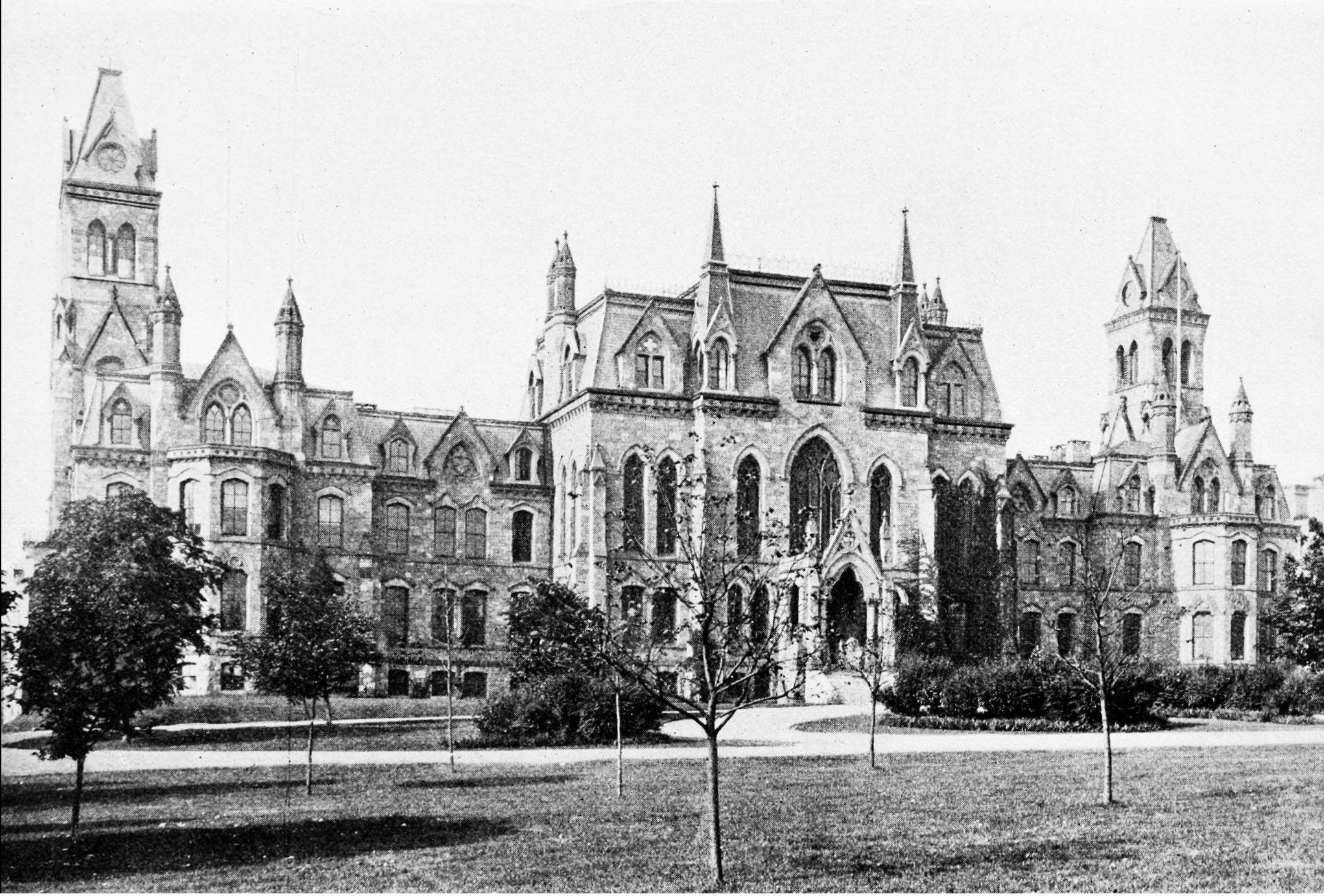
Lists
Fifty years ago, a signup sheet was posted in Krebs Hall at the University of Pittsburgh’s Johnstown campus, asking Jewish students to kindly provide their names. A friend of mine was a recent arrival at the campus. She saw the sheet, and phoned home to Wilkes-Barre. She told her mother about it. Together, they speculated on what it could mean. It was the mid-70s. They decided this was no time for Jews to be signing lists. It never led to anything good. This story came to mind this week when I read a headline in The New York Times: “Judge Is Skeptical of Penn’s Argument Against Trump Demand for List of Jews.” The Trump Administration had sought a list of Jewish faculty and staff employed at The University of Pennsylvania. The demand is part of a government investigation into allegations of antisemitism on college campuses. Trump has been at war with academia, especially the Ivies. They gave him an opening during the war in Gaza. One would be hard-pressed to disagree that antisemitism abounds at colleges under the mask of sympathy for the Palestinian people. Many protesters replaced “Jew” with “Zionist” as cover for their bloody-minded disdain for an entire people. Some used terms such as “genocide,” and applied it to Israel, possibly ignorant of the grotesque mockery they were employing. He word emerged in 1946 to describe the Holocaust. Israel’s establishment in 1947 was precisely because Jews need a homeland. Fifteen-hundred years of inquisitions, purges and pogroms had taught them as much. Yet, at Penn it is the Jewish faculty and students who are resisting this list. If lists were a genre of literature, “Lists of Jews” would be found in the history section, next to Third Reich memoirs. Part of the disquiet might stem from disagreement among Jewish Americans over who is right in the Gaza conflict. College is where such arguments are loudest. Yet, in this case, both sides appear to agree on something: unhappiness over who’s doing the asking and what might come of it. Donald Trump is, if nothing else, a staunch ally of Israel. His daughter is Jewish and his son-in-law has been dispatched on important diplomatic missions. His inability to tell the truth and his unmasked disdain for minorities of color reflect not just Donald Trump, but Donald Trump’s enablers. An unsavory swath of Trump’s core supporters were homegrown fascists of the sort that chanted, “Jews will not replace us,” while ostensibly defending a statue of Robert E. Lee in Charlottesville, Va. These were Trump’s “many good people” and it’s a good bet that a few of them joined in the siege of the Capitol on January sixth. They are the bridge between Trump’s population of MAGA Christian immigrant-baiters and old-fashioned Jew-haters. Trump’s orbit employs, or has hosted, enough of them for any careful observer to dislike the assembling of this list at this time by this administration. Jewish students and faculty at Penn are right to be nervous, but this time the fault lies with the same left that is home base to Trump’s biggest critics. The judge hearing this case is Gerald J. Pappert, a Republican appointed to the federal bench by Barack Obama. His career has been a study in restraint and fairness and, most of all, respect for process. The Equal Employment Opportunity Commission is conducting a workplace discrimination investigation and enough of Penn’s protesters crossed the line needed for a closer look. It is one of the many ways the political left has made things worse for their cause. Pappert understands that the EEOC can’t conduct discrimination investigations without the names of those who might have been discriminated against. To weaken its powers to gather information would weaken a system designed to do good, even though it is currently under the thumb of an arguably bad man. There is, though, the question of why the University of Pennsylvania, or any institution of that sort, would have such a list to hand over. I do not recall any academic employment forms that request an applicant’s religion. Other than going by stereotypical names, how precisely would the administrators at Penn know? Will they request that Jewish employees self-report? The options sound uglier by the moment. Judge Pappert made it clear: his role is not to decide the case but rule on whether the government has brought one. It has. Nobody has to like it, but the government has brought a case and the law gives the EEOC the right to subpoena evidence. It will be entirely something else for the government to prove that Penn discriminated against those employees because student demonstrators behaved like jerks. Oh, about that list from 50 years ago: a Jewish psychology professor and advisor to the campus Hillel Society, was hosting Rosh Hashana for students who couldn’t get home for the high holidays. He didn’t want to overlook anyone. It seems a bit silly in retrospect. It seems an entirely other thing when the federal government is asking for names on behalf of a president whose movement has welcomed Tiki Torch fascists into its ranks.
Pittsburgh Tribune-ReviewMarch 24, 2026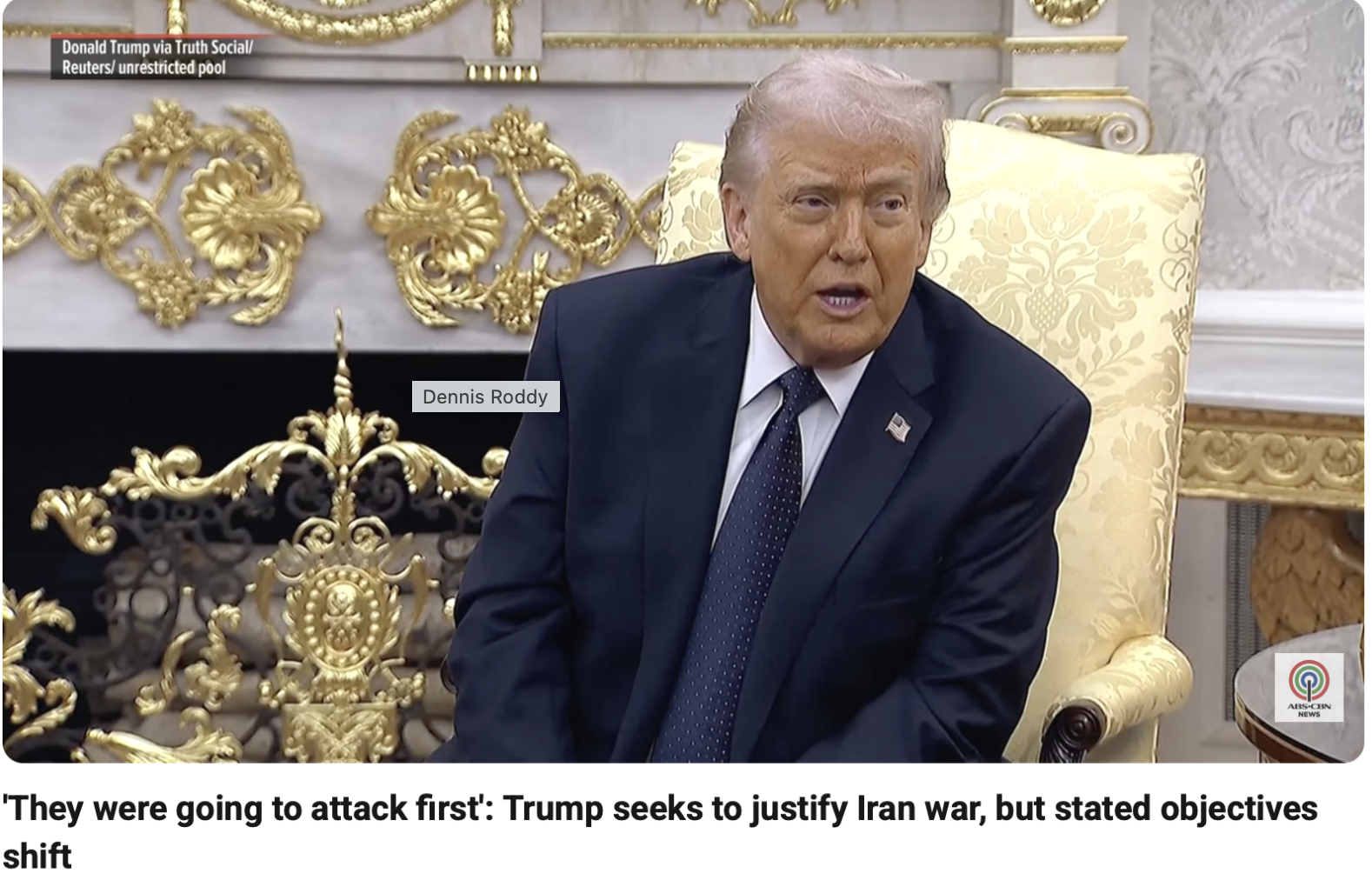
Perhaps they were planning To hit back first all along
I do not wish to sound like a cynic, but it is hard to avoid such a thing when discussing Donald Trump. He is so cynical that one cannot examine him without at least learning the same language. So, it was easy to doubt his announcement that other excuses had passed their expiration date, and that it is now his position that the U.S. and Israel started bombing because they thought Iran was going to strike first. This challenges even the most naïve among us to accept such a premise. There are several reasons and I shall offer them up.

It beggars belief that Iran was planning to strike at a superpower two oceans away and on guard in the extreme against terrorist actions. Such American bases or institutions that might be in place abroad enjoyed the umbrella assurance that, if hit, the U.S. would obliterate their installations in much the way they are currently doing. Capping the head-of-state is a pretty thought-out strategy. Possibly they had information that the late lamented Ayatollah was going to flee his residence.

Likewise, it is hard to imagine that – especially with the west already on a war footing – the Iranian leaders would have sought to defend their efforts to assemble nuclear weapons by attacking Israel, a missile-range neighbor that already has them. Note that Iran’s occasional missile into Israel has usually been aimed well off the target in a show of solidarity with other Muslim states, but nothing more. The Iranians and like theocracies know that if they ever came close to their dream of destroying Israel, their victim would go out shooting.

The Iranians had more to gain by diplomacy, especially the stalling-for-time part. They would not be able to resume development without it being detected. The “Islamic Bomb” they sought is already in the possession of Pakistan. The Iranians were attempting to join the MAD club, as in Mutually Assured Destruction. It’s the theory that whoever has The Bomb isn’t going to risk firing it at an equal nuke power. Iran wanted to make sure it could never be safe to attack. Trump’s cutthroat business mindset would tell him to make it impossible for an opponent ever to rise. It is not an endeavor in which the stronger side seeks equality. Much the way Trump hits on women while married because he can, he attacked Iran because he could. He has a libido for everything. That is what makes so many statesmen dangerous. History is full of this type of man from every ideological stripe. We just landed with one who probably didn’t realize he was in training to become an autocrat. The world has suffered such fools before. Not all of them were bad, but their worldviews did demand the occasional wicked deed. With Trump, we get the 120-proof vintage.

Stupid Hands
Donald Trump just oversaw the ultimate school shooting: scores of girls at an Iranian academy obliterated with a smart bomb guided by stupid hands.

Throughout the day, the administration did what it could to explain itself. Iran’s citizens needed our intervention in order to rise up and overthrow a monstrous government. Iran was making progress developing the nuclear capability that Trump insisted we had obliterated last year. I am reminded of the story my first father-in-law told me about Tokyo Rose who broadcast the announcement that the Japanese had sunk the American fleet and then warned that if they came back, the Japanese would sink them again.

By the middle of Saturday, we were told that Iran had planned “a preemptive strike.” This is one of those moments when it is so important that we be able to believe our leaders. To do that, though, we need believable leaders and Donald Trump has been such a serial liar that nothing from the White House can be trusted anymore.

One recalls that Israel launched a preemptive strike against the Arab states in 1967, an action that was readily justified by the fact that the Arab states had already made war on the Jewish state and vowed its eradication. The threat was quite real. Saturday’s attack on Iran had a level of the surreal, presided over by two men – Trump and Benjamin Netanyahu – whose conduct has been suspect from the get-go. Netanyahu needs a war to remain in power. Israel has a tradition of rallying behind the leader when their troops are in combat. Trump has done little to earn the confidence of his citizens if only because he has a tradition of placing troops on our streets, rounding up minorities, and mulcting the taxpayers with reckless spending, self-enrichment and disregard for the Constitution. Donald Trump just lost his tariff case in the Supreme Court and public opinion has turned against him over the unspeakable terror campaign he is conducting against immigrants and minorities. There is no polite way to put it. He has alienated the country and, while his base continues to justify almost any depredation he commits, that base is far from a majority. Within hours, Marjorie Taylor Greene, the Georgia madwoman who once embodied Trump’s agenda, was denouncing the attack. Trump has lost a constituency no politician can risk losing. He has lost the gullible.

There is no war I have heard of that was won solely by aerial attack. From the days of Robert Lovett, who largely created the Air Force during World War II, Americans have sought the means to win a war with boots on the ground replaced by bombs from the sky. The only instance in which a war was ended by bombing was the nuclear attacks on Hiroshima and Nagasaki. Even that victory required American occupation and tied us to an endless obligation to provide military defense for Japan. If the current adventure in the Persian Gulf takes that route, God help us all.

There is, too, the question of the advisability of turning war into a series of mutual killings of the heads of state. In 1943, American forces, acting on intercepted messages, targeted the airplane carrying Japanese Admiral Isoroku Yamamoto and shot it down. The action remained a matter of ethical debate for decades. Today, with armed kidnappings and aerial killings on the high seas a part of the process, ethical disquiet seems to be quaint, an artifact of the days when generals sent their personal surgeons to attend to their wounded counterparts. Chivalry has been replaced with meaningless diplomacy, whether by Trump’s son-in-law or the comically powerless United Nations. The Security Council held an emergency meeting late Saturday. Much concern was expressed. The expression of indignation by the Russian UN Ambassador Vasily Nebenzya was especially delicious, an example of one agent of lawlessness chastising another. Trump will not be reined in by the United Nations. He has called on Iranians to take to the streets to oust their tyrants. That is how tyrants fall. Like the Russian delegate, Trump should heed his own warnings.

Что делать?
When an organization’s reach exceeds its competence things are going to happen. They are going to shoot down their own drones. They are going to drop ailing blind men off on freezing street corners. They are going to enter into trade wars with no idea as to how, if ever, to conduct them. William Butler Yeats was spot on when he wrote “the center cannot hold,” and we are now spinning into a confederation of competing anarchies.

It would be easy, and somewhat comforting, to attribute this entropy to Donald Trump and the citizenry that elected him. Trump has earned his place in history’s basement, but he will be keeping company there with a roster of chancers and rapscallions who set the scene. Democracy doesn’t die in darkness so much as it wilts under the glare of pious ambitions pushed by men who want to be important. Agendas serve as both curtains and the choreographed shows that will be offered once they lift.

We can go back to Woodrow Wilson who sought to elevate and ennoble the entire world so long as that world was white. The man who died fighting for a League of Nations and self-determination for Europe’s small nations also resegregated the American government and proved himself a true son of the confederacy who showed a Ku Klux Klan movie at the White House. He was Teddy Roosevelt – domestic reformer, international racist – without the bellicosity, opting for golf over shooting elephants. To Wilson, diplomacy was high art, ennobling in its very practice, but meant to benefit its practitioners and not those who lived with the results. A quiz: what is the difference between Woodrow Wilson and Henry Kissinger? Answer: good question.

The dangers of shifting power from bureaucracy to even the most well-meaning of executives is evident. Jimmy Carter came into office in 1976 pledging to reduce red tape and put order into the chaos of big government. The Washington Post published a two-page spread listing every federal agency under the stark headline: “Carter’s Augean Stables.” A generation earlier, The Baltimore Sun had done the same thing under a different president. Within four years the man from Plains, Georgia, had drowned himself in detail by attempting to manage so much that he managed nothing.

Reform, whatever guise it wears, be it Jimmy Carter’s wack-a-mole efforts at micromanaging or Donald Trump’s performative fascism, inevitably finds itself overwhelmed by historical forces. The world is, after all, continuing on its course without the guiding hand of the United States. Our computers are now able to outthink us and trade and military alliances can be done by algorithm more effectively than diplomacy. Against the background of the Epstein scandal, paramilitary roundups of immigrants, erasure of Black history, and taxpayer-funded junkets reminiscent of Caligula moral indignation now seems comical. Truth to tell, the most trenchant insights into Trump’s depredations are now provided by late-night comedians. This is not because people don’t want to know what can be done. It is because we now know that, short of civil disruption – the least intellectual of enterprises – nothing can be done.
The Trump Show
Donald Trump’s State of the Union address was akin to being stopped at a crossing as an endless train of empty cars clattered past. He had almost nothing identifiable as policy to offer. He lavished praise upon himself for not knowing the basic mathematics of tariffs and who pays them. He reached into the worst recesses of his fetid soul and denounced Somalis as a race of monsters. The only useful message viewers derived was that he’s going to keep doing what he’s doing until someone stops him. I am starting to think we lack the national will to do so. We are all helpless passengers in the hijacked train of history, half-exhilarated, half-terrified and unable to stop the banner-hanging madman so in love with himself that if reincarnation is true, Donald Trump will come back as himself again, wholly unimproved.It is worth noting that an angry congressman, Al Green, was thrown out of the event early for holding up a sign that reads, “Black people aren't apes.” It was a breach of decorum at a time decorum is being defined by racists. Forget the sign and consider the reason: the President of the United States posted a video depicting Barack and Michelle Obama as apes. The only person penalized in connection with that despicable act was a congressman who felt the need to point out the casual racism of the current president. When someone has to risk ejection from the House chamber for defending the humanity of an entire race we are in profound trouble.Along with gross lies about “eliminating” tax on social security, tips and overtime, Trump pumped up economic investment figures by casually doubling the estimate of his own White House from $9.7 trillion to $18 trillion by counting vague pledges and previously announced commitments. He claimed to have increased construction jobs by 70,000 when The New York Times was quickly able to point out that the number was 14,000 and suppressed by his own tariffs, which made much construction unfeasible by raising the cost of building supplies. In all, it was a hootenanny of rants, raves and baiting. I was reminded at points of the old television show “This Is Your Life,” in which unsuspecting people were brought on stage and reminded of things they had done by people they weren’t expecting to see.Details of policy largely absent, Trump had to rely on spectacle. He handed out military decorations to three men, including E. Royce Williams, a centenarian who shot down four Mig fighters in Korea. That was during the presidency of Harry Truman. The medals awarded for events tied to Trump felt a bit off. A Medal of Honor went to a helicopter pilot wounded in a sneak attack that killed 32 Cuban soldiers and snatched up the president of Venezuela. There is precedent for this sort of thing. Nineteen soldiers who participated in the Wounded Knee Massacre in 1890 were given the same award. The Purple Heart was awarded to a National Guardsman attacked while occupying the streets of Washington in a Trumpian show-of-force. It is hard to know how deserving of awards two of these men were; certainly, it is hard to argue they were doing the Lord’s work, unless one holds Trump to be an irreproachable god. The Presidential Medal of Freedom was given to a hockey goalie for blocking 41 shots. Such is the state of our union.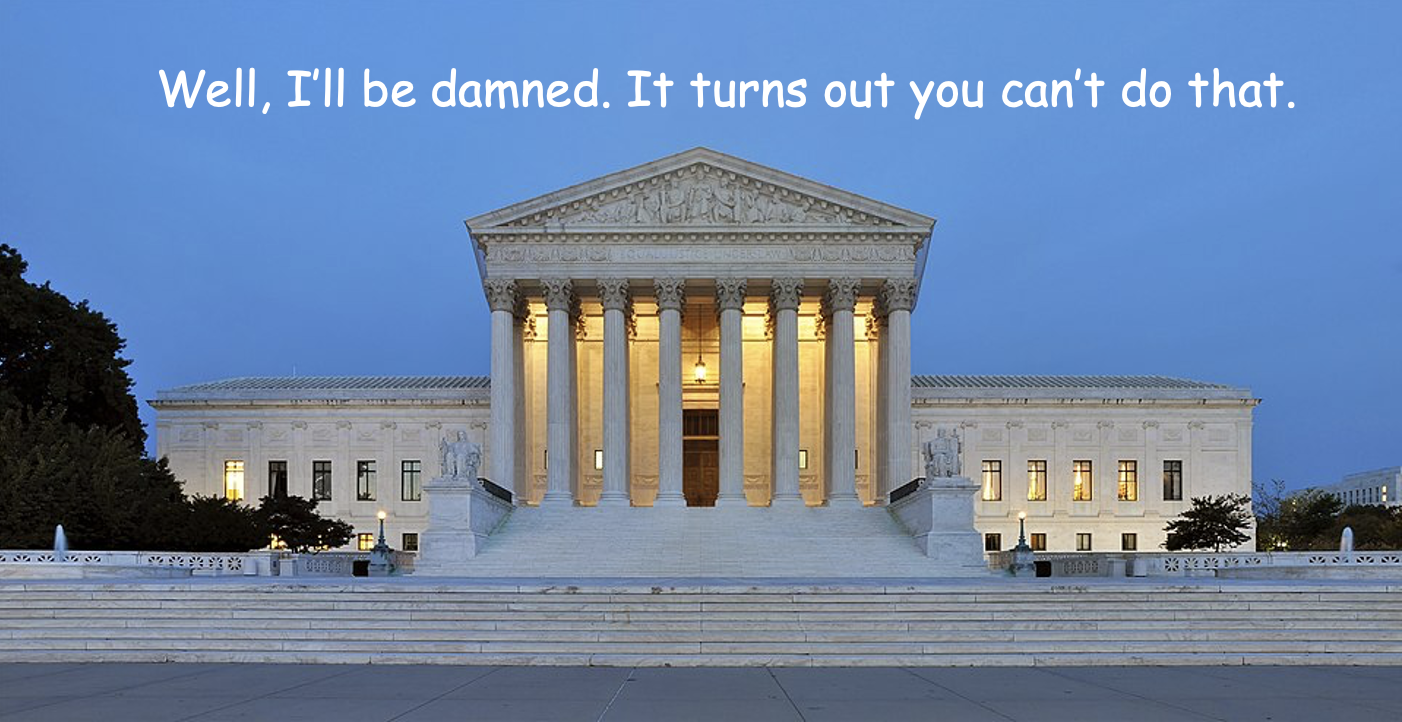
The court tells Trump no
It is possible that on Friday the Supreme Court accidentally declared war on Iran. Donald Trump lost bigly there. By a vote of six-to-three, the court ruled that the president cannot impose trade tariffs by fiat via a fictional national crisis.

Trump responded in two ways: he denounced the court as a collection of ninnies and he had the military surround Iran. Government-by-distraction is not new. But, much like the forward pass, nobody expected it to catch on the way it has. So, if not Iran, we shall soon find our attention diverted to some distant land we just couldn’t help but bomb.

The news here is less about tariffs than it is about Trump’s responses that combine vulgarity and elan. Presidents have lost Supreme Court cases before. Mostly, they have issued subdued statements. They are “disappointed,” or “disagree with the Court.” Trump denounced the six justices as “fools” and “lap dogs.” The Executive Branch just said it was ashamed of the Judicial Branch.

Then, the president immediately cited some other spell from the Federal Rules of Practical Magick and announced a new 10 percent tariff. Possibly the most edifying aspect of this debacle is the insight it offers into the spaghetti tangle of federal regulations. It now turns out that when one law doesn’t suffice, there’s always another. Think about how federal prosecutors use the mail fraud statute when they can’t otherwise make a case.

Trump aimed higher. Instead of using a garbage statute to make a worthwhile case, he debased a law written with a noble purpose. Trump imposed his tariffs under the Emergency Economic Powers Act of 1977. It’s a post-Watergate law intended to limit executive powers and prevent the very abuses Trump committed. Brett Kavanaugh, acting less like a jurist than a White House staffer, graciously catalogued a list of other laws the president might use to impose tariffs and resume playing hell with the economy. Trump cited one of them hours after Kavanaugh’s dissenting opinion was published and announced a fresh 10 percent tariff. The clock starts again. Trump governs in a permanent state of overtime.

The legal aspects of this dispute are beside the point. Trump recognizes no lawful limit to his powers. He sees the Constitution as a sort of Rubik’s cube that, once figured out, grants him powers previously reserved for Caligula. The tangle of federal laws — especially those written by commercial lobbyists — will make it possible for him to drag things out for years. He is a murderous despot, but his real evil lies in his talent for doing evil lawfully.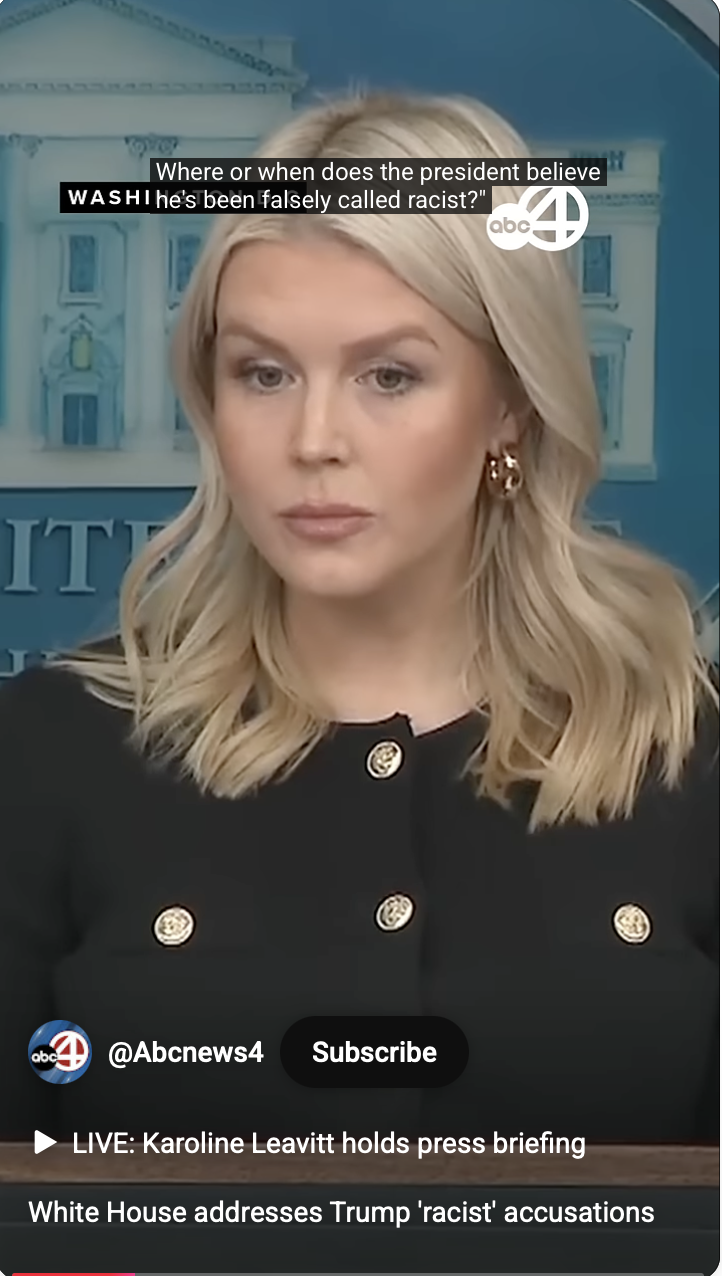
Racist-in-Chief
Donald Trump’s hateful impulses took a new twist in February when he posted an online video depicting Barack and Michelle Obama as apes. I cannot believe I just wrote that sentence. I was born at a time when, however imperfectly, America was making racism morally unacceptable or, at the very least, declassee. Things have changed. Trump no longer hides his racism because it won’t cost him anything. He can blame an errant staffer for the post, but he will never apologize, be it for carelessness or for establishing a regime in which racial and ethnic hatred seeps from the gap in every office door. His hypocrisy is vivid. He is depicting two other people as apes, but Trump is the one throwing his feces.Distressing as Trump’s post was, it was the metrics below it threw a sliver of light on what we have become or, God forbid, always been. Before Trump could hurriedly delete the post, it gained a few thousand “likes” and a couple hundred reposts from readers. In other words, it was building a following right away. This fits a pattern. There was always a base of racists down at the bottom of Trump’s pond, but the people who probably are not openly racist are constructing a language to exonerate the boss. It’s a short hop from enabler to participant. His core is hardening.Ordinarily, a politician
panders to his base.
In Trump’s case
his base panders to him.
Whatever Trump does finds an ardent and supportive constituency, be they members of Congress or men leaning on shovels over a ditch. If Trump does something, a legion of weasels forms up behind him squealing praise. Killing people in boats by drone strikes or gunning them down on the streets of Minneapolis have all found loudmouths ready to cheer him on and functionaries ready to justify him. This is an inversion of political norm. Ordinarily, a politician panders to his base. In Trump’s case, his base panders to him. His support comes almost entirely from people who want something from him and are willing to strip naked in public to get it. Shame has ceased to exist among senators and the assorted town drunks and dogmatists we elect to the lower congressional chamber. Among the populace, a combination of indifference and delight have empowered a monster. From dread of FBI raids to the fear of job loss, or just plain old wanting to fit in with family, the MAGA legion will tell Trump anything they think he wants to hear. I watch any press conference with Karoline Leavitt just to prove to myself that there’s someone willing to actually say Trump’s lines without breaking. She’s like a Wallenda without a net on a windy day. It’s going to happen and I want to be there to watch it live, but I’m still waiting.Leavitt held to form, dissembling all over the floor on behalf of Trump. The video, she said, was from a longer meme that, ala “The Lion King,” depicted the president as King of the Jungle and other characters as various other animals. The video was received from a Trump-allied source. Could Donald Trump truly have viewed it and not known it was racist? His father was in the Klan, so surely he’d have heard that ugly trope at some point in his life. Possibly, someone in MAGA will go a bit deeper into the Disney filmography and make the Obamas the jive-singing crows from “Dumbo.” The only lesson they have learned from this episode is that there’s a great new way to poison the atmosphere. Trump’s supporters are not uniformly racist. There is a weakness of soul involved as well. Tim Scott, a black senator from South Carolina, Tweeted that he was praying that the ape posting was fake, “because it’s the most racist thing I’ve seen out of this White House. The President should remove it.” Let’s parse that. Sen. Scott called the post “the most racist thing,” he’d seen from Trump’s administration. What were the other, less racist posts? Also, it is worth noting that Scott’s prayer was insincere, because he said the President should take it down. Now, either Scott was feigning his shock or he assumes Trump’s powers extend to removing the social media posts of others by fiat. This is not inconceivable. He’s already removing entire families. Still, a person in possession of their faculties can see that Scott’s reaction was political fear, not personal indignation.Trump’s conduct would have earned a place in the annals of depravity in any other political era. The problem is that the ethical ground has shifted. Americans have become, as it were, Europeans without the veneer. A German will tell you racism is wrong while still holding a soft spot in his heart for his grandfather in Argentina. A Frenchman will insist he is not a racist while helping Marine LePen and her goons outperform the polls. Truth to tell, many of us hold deep grievances in search of a parking spot. I personally would like some explanation absolving me of responsibility for my life’s failures and a credible scapegoat would be much appreciated. Too many are incapable of this level of introspection and it is to those groundlings Trump has thrown a bone, while his enablers aggrandize themselves of power and as much of the treasury as they can fit in the trunks of their limousines.The CEOs currently kissing Trump’s ass know that his ruthless sweep of immigrants, even the shooting of the occasional protester, is going to inconvenience them. Show me anyone’s IT department and you’re taking me on a tour of Asia. Those punitively priced H1B visas are going to cost them a slave-catcher’s bounty. But they didn’t get rich without also understanding another bit of realpolitik: The people who elected Trump demand visible action. They long ago moved from “Make America Great Again” to “Take That!” as their policy credo. The street combat played nightly on the television is Trump’s proof to his surly followers that he’s doing something. The cult of action is a fundamental piece of Trump’s political style. A recutting excuse offered by his voters is that “at least he has a plan.” That’s stupid, but stupidity is a condition without a choice. The politicians and tech bros sucking up to Trump are guilty of cynicism on a level that proves that capitalism produces capitalists worth hanging. Nothing delighted racist motel owners during the Civil Rights era more than their ability to say they were just following the law. Someday, that excuse won’t sell.
The Arc d’Trump
On a day ICE agents once again shot and killed a protester, then all but indicted the corpse for terrorism, Minneapolis sat at the edge of riot. The rest of the nation suddenly became concerned about the weather.Despite the televised buildup told in Old Testament style, the snow will come, inconvenience us, and then pass. It’s weather. That’s what it does. What it cannot do is change the country in a useful way. Snowed in or sunburned, we remain an exercise in egregious bloody mindedness.There is latent in the American character a level of pure contrarianism that affects all levels of the social strata. The problem is that one of those strata locked onto a line of argument spectacularly lacking in reality, common sense, and compassion. That’s how we got Trump.Trump appeals to people that don't know much but who are willing to listen to anything hinting at some sort of special knowledge or code that explains their life's failures as the work of someone else. If he hadn't run for president he might have started a militia. This does not account for the full universe of those who are drawn to Trump, but it represents enough of the people who used to vote for Democrats because their parents did but gave up when party stalwarts and intellectual leaders stopped sounding like their mom and dad.So, for all the gauzy view of democracy and Marshall Plan sentimentality, we’ve become a bigoted, murderous lot. Congress has added cowardice to the mix. But Congress and the supine Supreme Court cannot shoulder even most of the blame. There can be no doubt about it: we suck. A nation that once rhapsodized about its immigrant origins, and which set the gold standard for democratic governance, now rounds up strangers, sprays gas in the faces of anyone who objects, and sends masked agents of the state into streets and homes as if the Fourth Amendment never existed. This is the government we installed.Our foreign policy consists of insulting other nations, kidnapping a head of state for a narco show trial, while declaring our plans to swallow up Canada and Greenland by whatever means we can get away with.Does anyone in their right mind believe that Europe will forgive us after Trump is gone? Any thoughts on whether trade with the world will ever return to its default setting? Can we build enough bombers and tanks to replace the NATO alliance?By returning Trump to office, corrupt, convicted and ragingly authoritarian, we said something about ourselves. Either we don’t care about bigoted imperialism, or we don’t care enough to abstain from enabling it. Each of us has given Trump the final victory of emulating his ethos: I’ve got mine, so why all the fuss. move on,The only thing that might tilt the game is that now ICE is killing white people. I speak for all white people when I say we hate that sort of thing, and damned if people don’t pay a bit of attention to what we think. It’s not a game-changer in itself, but the optics are awfully bad. Indifference is still the standard reaction so long as the economy holds. We long ago stopped being the country that wouldn’t put up with troops on our streets so long as there was cash in our pockets.Donald Trump behaves
like the president-for-life
of some Central American
regime we forgot
to overthrow
Yet if the failure to do what is transparently the right thing to do is a collective burden, think of how the names of Donald Trump, Stephen Miller, Kristi Noem, and Greg Bovino will fall on the ears of school children in 50 years. As a citizenry, we’ll drown our guilt the way we always do – revising our own family stories about who voted for whom. Introspection is not our forte. We're more likely to deviate into a public dispute over the correct use of "whom."Bovino, Trump, Miller and Noem have etched their names into the history of this moment. ICE and its enablers will be remembered as Donald Trump’s Tontons Macoutes and Trump its bellicose Papa Doc.With his delusional behavior and grandiose, filibuster-length speeches, Donald Tump behaves like the President-for-Life of some Central American regime we forgot to overthrow. Anything that impedes him is either conspiracy or treason. The Department of Justice exists as an agency of legal punishment for the political crime of defying Donald Trump. I would give even odds that at some point he will shout, “seize him, you fools!”Little wonder that each cabinet meeting begins with an obligatory round of fawning over Trump before they proceed to the business of driving the United States toward a cliff. Who wants to get on the wrong side of a boss who can sic the FBI on them?The sans culottes loved Trump because they needed to be lied to in ways that made them feel good, which is to say he aped their simpleton beliefs. This was the first, most alarming digression from anything resembling traditional conservatism. Susan Sontag once said that communism was incipient fascism. Well, guess what, else is: fascism. Harkening to a lost time that we can somehow get back by force is pure Mussolini. It worked on an Italian populace that was equally ready to elect a socialist so long as something got done that made them feel the least bit empowered. Wars of conquest, both foreign and domestic, are the perfect unifier. Anyone’s kids can don the uniform and be called a hero.This constituency has been putty in the hands of Trump’s handlers. From the fringy policy wonks of the nativist right to the conniving greedheads of the money world, every administration insider knew the secret language: abject self-debasement at the feet of the angry god in the Oval Office.In the process, the adventurers and their true believers have assumed control of the Republican Party and ruined the cause of the conservative intellectual movement.Much like Weimar Germany, the stage had to be set for a character on the order of Trump. Years of demonizing liberalism as a disease rather than a necessary political counterweight made the term “liberal” bad marketing. This disrespect for process dates to the 1988 presidential campaign of George H.W. Bush. His son, Bush minor, disregarded Constitutional principles, establishing an extrajudicial prison in Guantanamo Bay, water boarded the Constitution, used so-called “signing statements” to evade the will on Congress, and generally acted much the way one would expect the dauphin upon his ascension to king.This kiss-my-ass style of politics was evident as well in the world of Barack Obama, a man out-of-touch with middle America (remember how us hillbillies “cling to their guns and religion”?) He was what a gentleman would call “a smooth operator.” Obama was so smooth that nobody noticed all the deportations during his watch. Possibly he was ashamed. The capacity to feel shame was one of his human qualities. What he didn’t do was make a self-promoting spectacle of the process. It remained for Trump to bring the oily muscle and the pathological fascination with force to the practice.Too many speculate on the grand designs of Trump’s conduct. The violent burlesque of his reign suggests that Donald Trump has no grand design. He has a grand impulse, one he cannot himself control. That’s quite enough to destroy a country.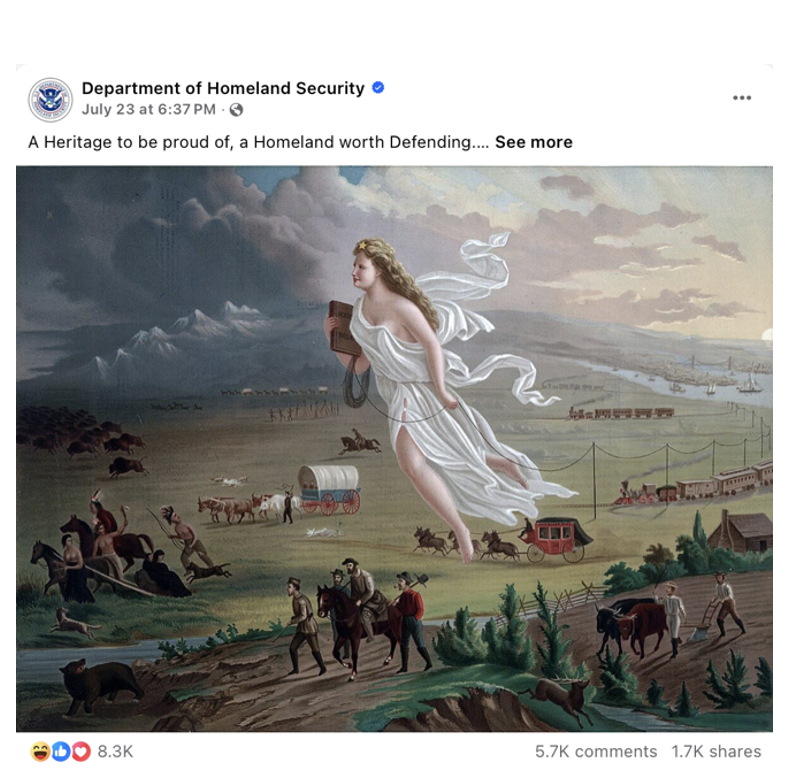
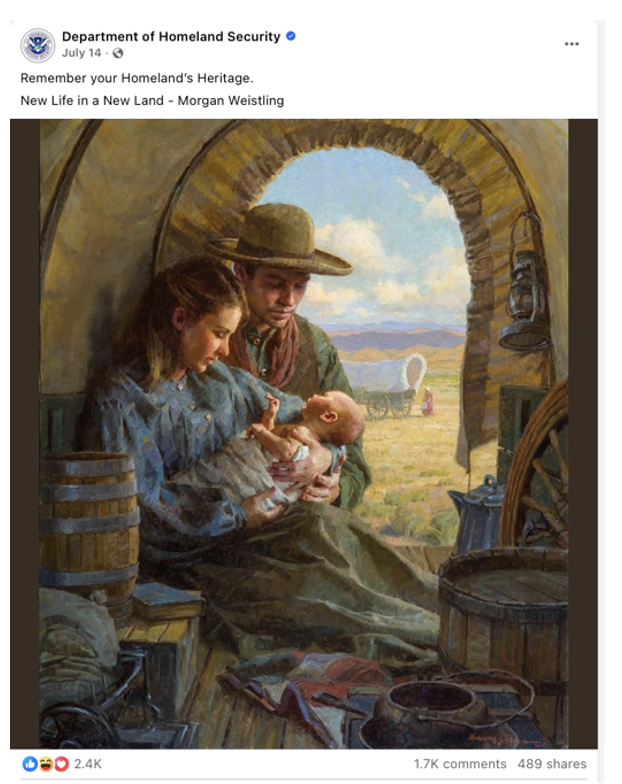
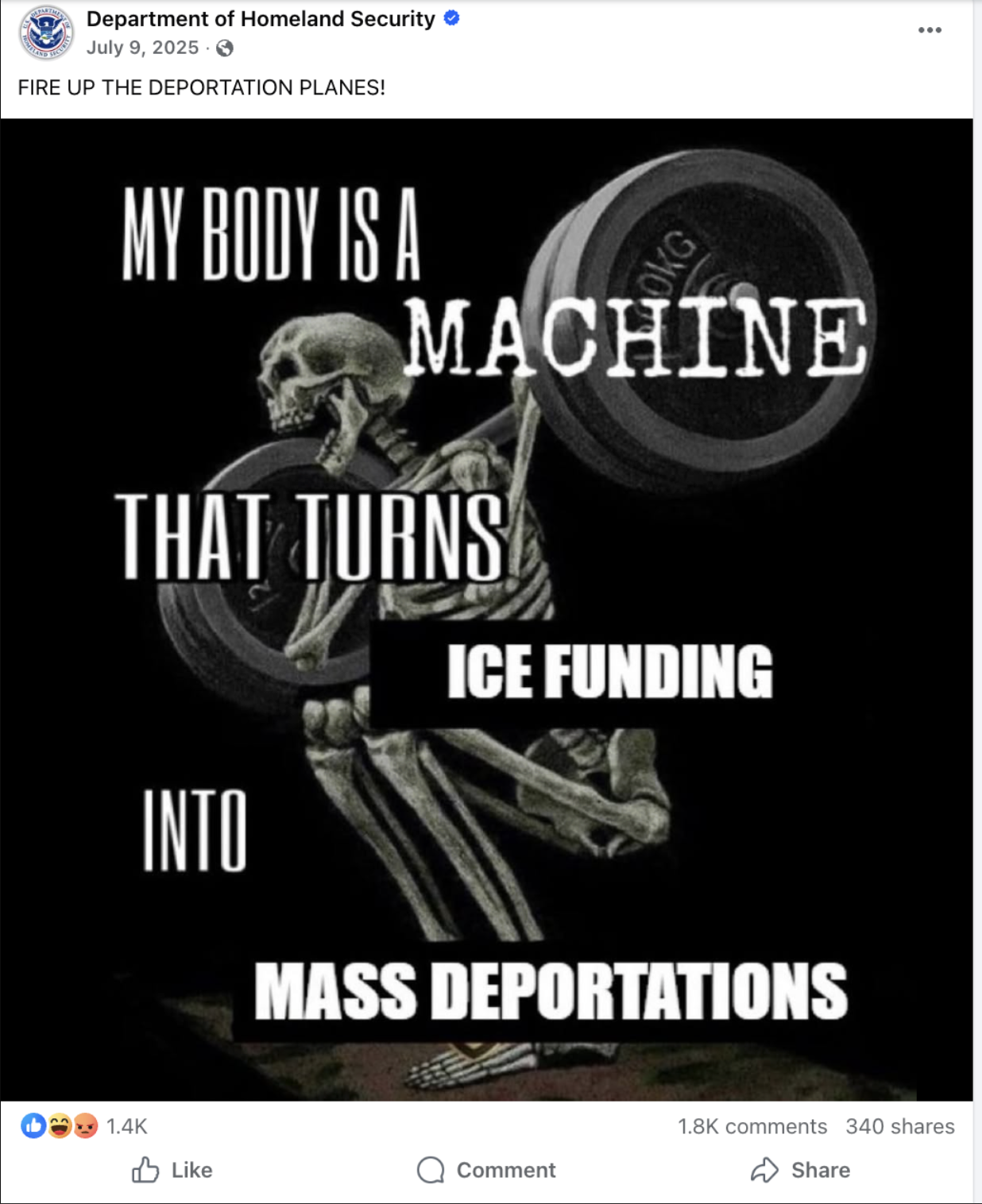
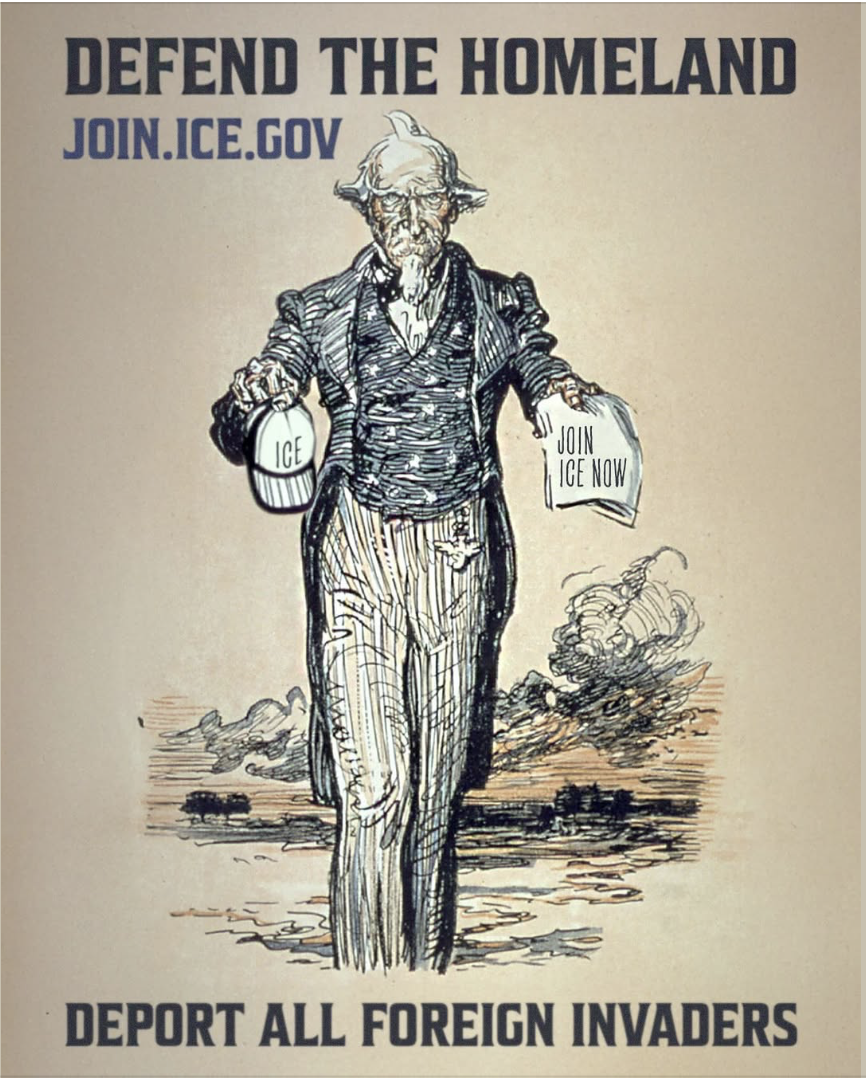


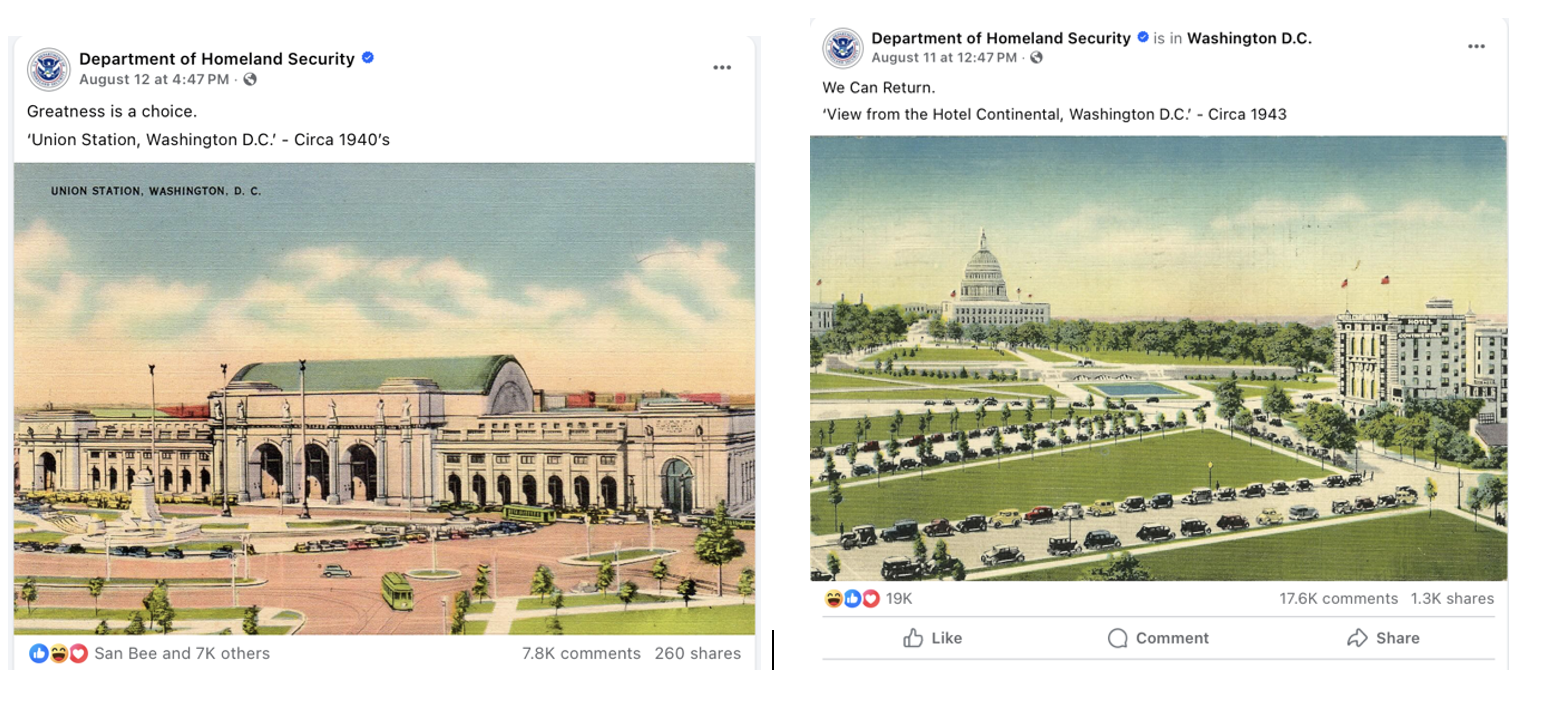
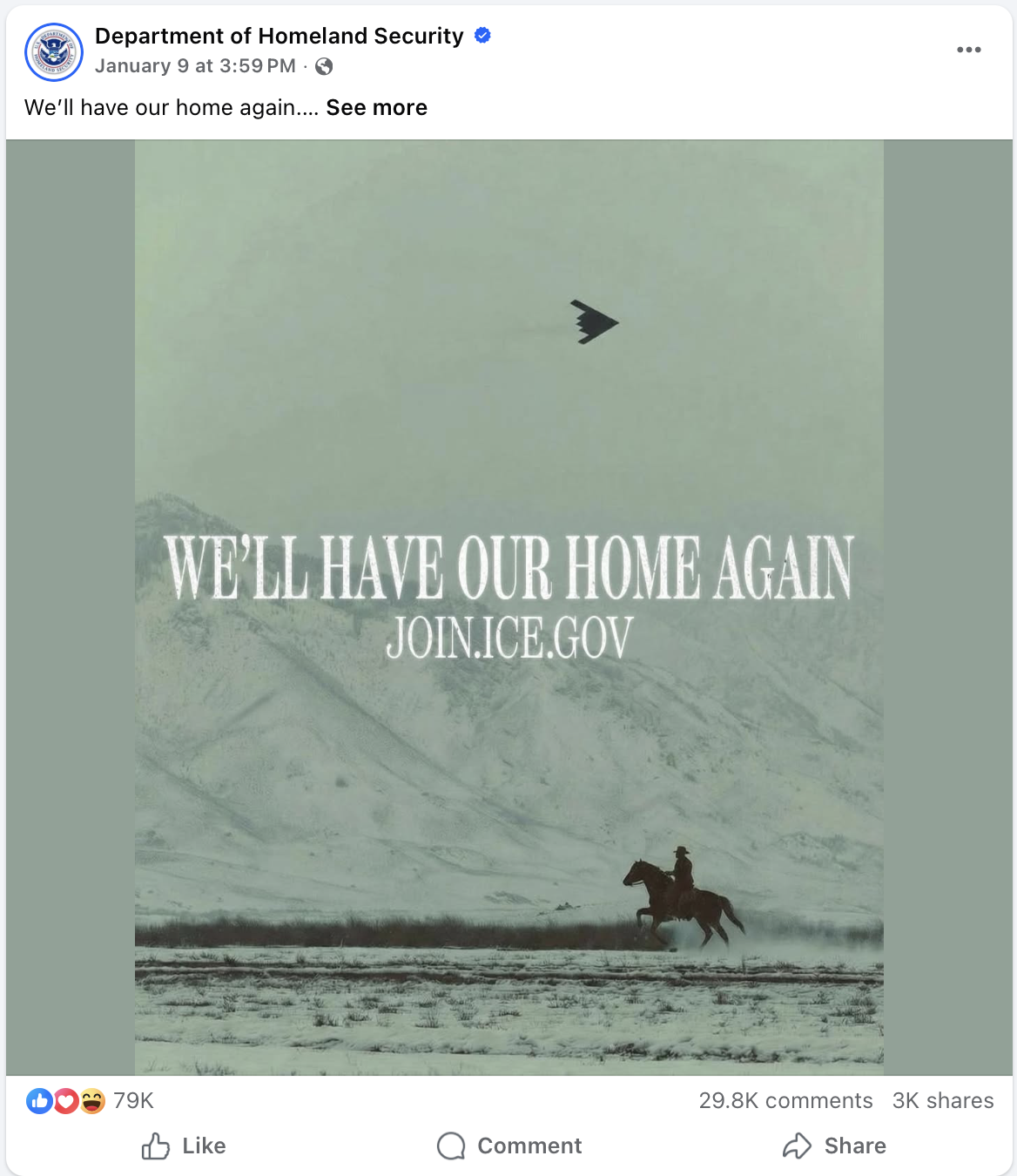
The fascist aesthetics of ICE
Sometimes, pictures are for people whose heads ache at the very thought of thinking. A school of art can be unifying for people of shared sentiment. The fascists of the pror century understood this well. They knew that where complex thought failed, unencumbered impulse could triumph.The Trump administration and its enablers have offered proof of this villainous idea in the Department of Homeland Security’s mélange of memes and illustrations seeking to recruit not merely new hires, but the kind of new hires demanded for the accelerating roundup of immigrants. Here are a few examples pulled from the DHS Facebook page:From white settlers trekking across the plains overseen by an alabaster guardian angel, to the Death’s Head imagery calling on young men to join the hunt for any immigrants that lack a hovering spiritual guardian, DHS and its cosplaying director Kristi Noem employ graphic arts in a way that would have been familiar to the political artisans of Mussolini’s Italy. They are doing this in an almost Proustian way: attempting to recapture the lost past through vivid sensation and force of will.We cannot know if Jonathan Ross ever saw these images. We do know that the ICE he joined was shaped by the ethos that produced these recruitment ads. He went on to fire three shots into a car driven by a Minneapolis woman during an ICE raid that her spouse was protesting. The adolescent braggadocio of Noem's agency translated into a firearms death for disobedience.Much of the art is not new. That’s almost the point. Those settlers are from an 1872 painting by – yikes – an immigrant painter named John Gast. Called “American Progress,” it was inspired by the Manifest Destiny movement that displaced native American tribes as we moved from one coast to the other. Uncle Sam meme has been around for a while, too. His iteration in the accompanying illustration comes from the account of a self-described Christian nationalist. It is no mystery that a number of the ICE videos showing helmeted agents sweeping across the landscape include Biblical verses on the screen. This is an exercise in going back.***Consider the vintage postcards displayed on the DHS site, depicting iconic Washington locales in the 1940s. That is to say, they are showing the nation’s capital city not only in the pre-homeless encampment days, but also in the pre-integration days. The southbound travelers from the Union Station imagined in these cards would have ended up in towns where stations had segregated waiting rooms.Another card offers the view from The Hotel Continental, accompanied by the DHS message, “We Can Return.” The view from the Hotel Continental, by the way, looks grand because it is a painting and reflects the sort of unrealistically idealized Washington to which the current administration aspires. “We Can Return” is a dispiriting choice of slogan for an illustration dating to the days when Washington’s schools and many of its other institutions, including its armed forces, were segregated.The unifying theme is a rejection of the modern, an appeal to simpler times, if not in the real world, then in the imaginary one where established norms are unchanging, the flag has 48 stars and all the kids are white. Cults of tradition need a touchstone. Those postcards are a veritable Rock of Gibraltar on which we can mind-graffiti any needed slogan.The impulse to act has displaced the need to discern. One need only read Umberto Eco’s 1995 essay “Fourteen Ways of Looking at a Blackshirt” to comprehend how the least merciful elements of the current regime are employing art in the service of unifying cruelty. The willingness of Trump’s acolytes to embrace the denunciation of those they hate was on display July 31 in the Beaver County borough of Ambridge. After a massive sweep across the town, stopping brown-skinned motorists, invading a Latino grocery, and arresting anyone who dared protest, a group of officers was walking away as angry onlookers cried, “fascist.” One of the officers threw up what can only be described as a dismissively half-assed Nazi salute.[1] The regime is no longer afraid of being seen as cruel. They embrace it and they have the pictures to attest to their devotion.This fusing of bro culture with political ideology is not merely a tidy fit. It’s a means of justifying the least noble impulses of humans by inverting the language of morality. Think of Gordon Gekko’s famous “Greed is Good” speech in the movie “Wall Street.” Nobody thought it would make a great recruitment ad for a stock brokerage. Yet, that’s the message we’re getting from the graphics of DHS. You speak to your target audience. The one Kristi Noem and her posse are recruiting might someday find themselves deleting their Internet search histories while awaiting a knock at their own doors.


Brigitte Bardot
Exits Stage Right
Brigitte Bardot threw off centuries of convention about how women should behave, became an icon of desire and then amassed a late-life record as a bigoted xenophobe whose once avant-garde views soured in the martini glass of a lost time.Her death at 91 has occasioned clumsy and sometimes retracted words of praise.Conservatives, who denounced her sexually liberated movies of the 50s and 60s, praised her as an embodiment of French patriotism. The left, which embraced her, suddenly found themselves confronted with a national icon whose views failed to evolve from a time when shedding one’s clothes on screen was revolution enough.Bardot’s breakthrough movie, “And God Created Woman,” seems tame by today’s standards, but only because it was in that role that Bardot challenged standards about how a woman was expected to behave.She played Juliette Hardy, an 18-year-old orphan who scandalizes the fishing village of Saint-Tropez with her rebellious sexuality. The movie starts with her nude and ends with a drunken dance so teasing that literal gunfire follows.Bardot moves through the film like a cat: prowling, sensual, indifferent to the reactions of those around her. Bardot wasn’t acting. This was her. She went on to prove it, with four marriages and so many affairs it seemed she was in a polygamous relationship with all of Europe.Bardot’s staggering beauty and unstudied vivacity made her the scandal we all wanted to witness. Her acting was less interesting than the reasons for her enduring celebrity. That is to say, no one could quite explain why she continued to fascinate to the point that the rich and louche hastened to Saint-Tropez, turning it into a sort of Jet Set holy land.Yachts crowd the docks and stars crowd the Five Star hotels and Michelin rated restaurants. In her twilight years, she denounced this gluttony and overdevelopment. The town’s mayor responded by inviting her to reflect on “who brought vice and lawlessness here.”Along the dock where much of the movie was made rests a gold statue of a nude Bardot. In almost every government lobby is a statue of Marianne, the Lady Liberty of France, and Charles DeGaulle personally chose Bardot’s face as the model, calling her the greatest French export since Renault automobiles.Bardot threw off acting in 1973 to devote her remaining years to animal welfare. It was a Greta Garbo act with a wonderful twist: she exited the world of movies and reappeared like a scolding apparition in that of politics. Absent from the screen, she held press conferences demanding an end to seal hunting and bull fighting.Bardot also thought it entirely normal to bemoan an influx of Muslims. She complained that gays were “circus freaks,” and called the inhabitants of Reunion Island, a French territory off the coast of Africa, “savages.” Women who complained of sexual harassment were, to her, termagants who made too much of the occasional pinch on the bottom from a leering casting director.If she was hurt and surprised by the five cases lodged against her for inciting hatred it was because she hadn’t really changed. France’s enduring racism dates back to the slave plantations of Haiti and the antisemites of the Dreyfus affair.One is reminded of how George H.W. Bush campaigned for Congress while opposing the Civil Rights Act, but asked a guest to leave a party at his house after telling a racist joke. Bardot would have wondered what the fuss was about because, to a woman who feels more deeply than she thinks, this sort of thing is normal.Her marriage to a former aide to French far-right, anti-immigrant leader Jean-Marie Le Pen and embrace of his party dispelled any doubt about whether these opinions were not momentary outbursts by a doddering old woman.Bardot was demanding a return to the very France she had done so much to change. The climactic scene in “And God Created Woman,” involves Bardot’s character doing an erotically charged dance around a roomful of African musicians. Having struck up the band, she now wanted the nightclub shut down.French President Emanuel Macron praised her artistry and pioneering free spirit. Ingrid Newkirk, the founder of PETA, not exactly a hotbed of antifeminism, lavished praise on Bardot for her animal rights activism. Closer to home, younger celebrities found themselves walking back earlier praise when someone advised them to Google the woman.Singer-songwriter Chappell Roan posted a statement saying, “She was my inspiration for red wine supernova,” a track from Roan’s debut album. “Rest in peace, Ms. Bardot.”After what must have been countless hits on reply buttons around the globe, Roan said she was surprised to learn about Bardot’s other activities. “I did not know all that insane **** Ms. Bardot stood for obvs I do not condone this.” Similar expressions of surprise came from actresses Apple Martin and Odessa A’zion.Obviously none of these celebrities bothered to read any of the countless obituaries that chronicled Bardot’s sins, both of the flesh and of the zeitgeist. Simply put: Brigitte Bardot was the pivot around which a part of the culture changed direction, not its director.The philosopher Simone de Beauvoir, in writing about Bardot almost 70 years ago, pointed out that, until husband-of-the-moment Roger Vadim corrected her, Bardot believed that mice laid eggs.That a woman could change the culture around sexuality and lack a fundamental understanding of the reproductive system of mammals should have been a clue. Bardot wasn’t acting so much as getting lauded for being herself. Sometimes that was a good thing, but only sometimes.Pittsburgh Post-GazetteDecember 31, 2025